


In Japan, these local ways of speaking are called dialects (hōgen).
In Tokyo, people speak Standard Japanese.
This form is used in schools, TV, news, and business.
However, in places like Osaka, Fukuoka, and Tohoku, people use different words, sounds, and grammar.
These are not mistakes. They are real local languages.
Dialects show where a person comes from.
They also show the history of each area.
Major Japanese Dialects
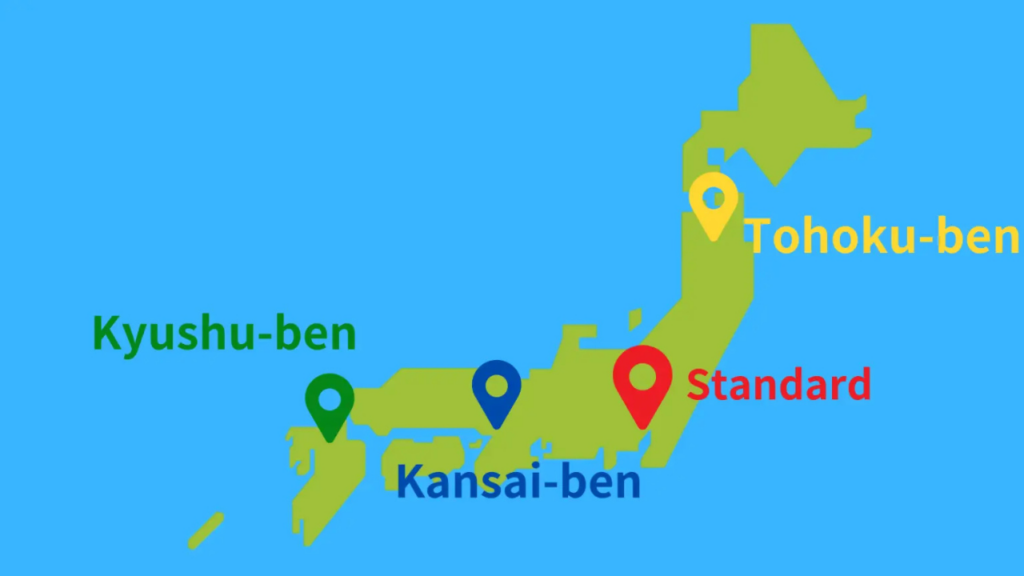
Japan has many dialects, but three stand out the most.
Standard Japanese (Hyōjungo)
Used in Tokyo and across Japan.
It sounds clear and neutral.
Examples
“Arigatou” = Thank you
“Hontou?” = Really?
“Totemo oishii” = Very delicious
This is the form taught to all learners of Japanese.
Kansai Dialect (Kansai-ben)
Spoken in Osaka, Kyoto, and Kobe.
It sounds fast and lively.
Examples
“Ōkini” = Thank you
“Honma?” = Really?
“Meccha umai” = Very delicious
This dialect is common in comedy shows.
Tohoku Dialect (Tohoku-ben)
Spoken in northern Japan.
It sounds soft and slow.
Examples
“Nda” = Yes
“Kowai” = Tired (not scary)
“Daiji?” = Are you okay?
Many people from Tokyo find it hard to follow.
Kyushu Dialect (Kyushu-ben)
Spoken in southern Japan.
It often sounds warm and friendly.
Examples
“Suito!” = I love you
“Bari tsukareta” = Very tired
“Nani shiyō to?” = What are you doing?
This dialect appears often in movies and anime.
The Most Difficult Japanese Dialects
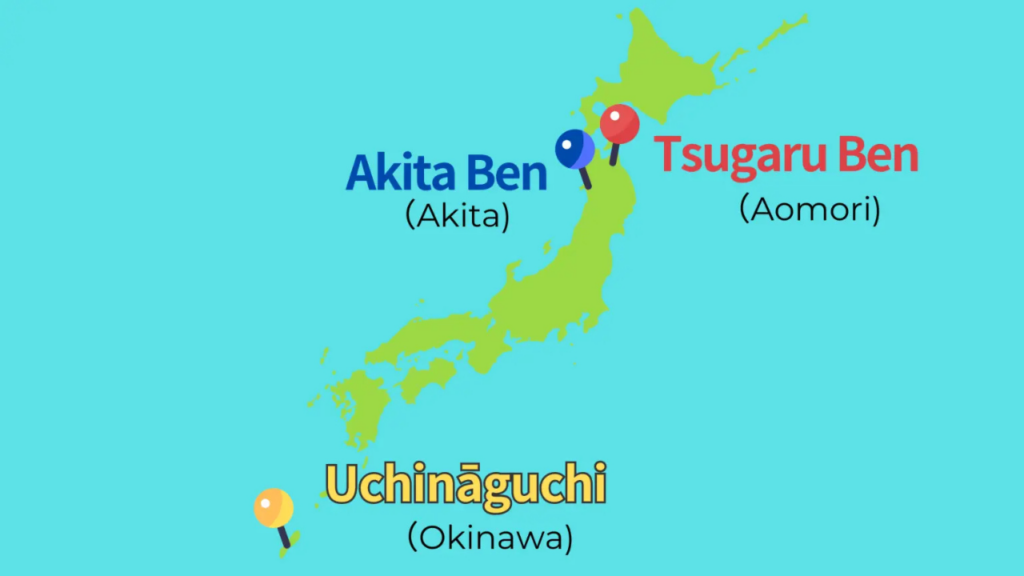
Some dialects are much harder to understand.
Even Japanese people can struggle with them.
1. Tsugaru Dialect (Aomori)
The words and sounds are very different.
Many people say it sounds like a foreign language.
2. Okinawan Language (Uchināguchi)
This is closer to a separate language than a dialect.
Standard Japanese speakers often cannot understand it.
3. Akita Dialect (Akita)
It has a special rhythm and many local words.
It sounds very different from Tokyo Japanese.
Tsugaru-ben is often called the hardest.
Many people say it is harder than English.
There is a video of local women speaking Tsugaru-ben, and it is very difficult to follow.
Where to Hear Real Dialects
The best places to hear dialects are local areas.
Visit markets, small towns, or izakayas.
People there usually speak their natural way.
You can also hear dialects in movies and shows.
Examples
Standard Japanese → Your Name
Kansai-ben → Detective Conan, Jarin Ko Chie
Tohoku-ben → Amachan
Kyushu-ben → Wolf Children
These help people get used to different sounds.
Why Japanese Dialects Matter
Dialects show the culture of each region.
Even simple words change from place to place.
Using a local word can also break the ice.
When travelers try it, people often smile.
Most people use Standard Japanese, called Hyōjungo.
However, many regions still use local dialects in daily life.
Kyoto-ben sounds soft and polite.
Therefore, many people link it to traditional culture and geisha.
Kansai-ben sounds lively and direct.
Because of this, people often use it in comedy and jokes.