
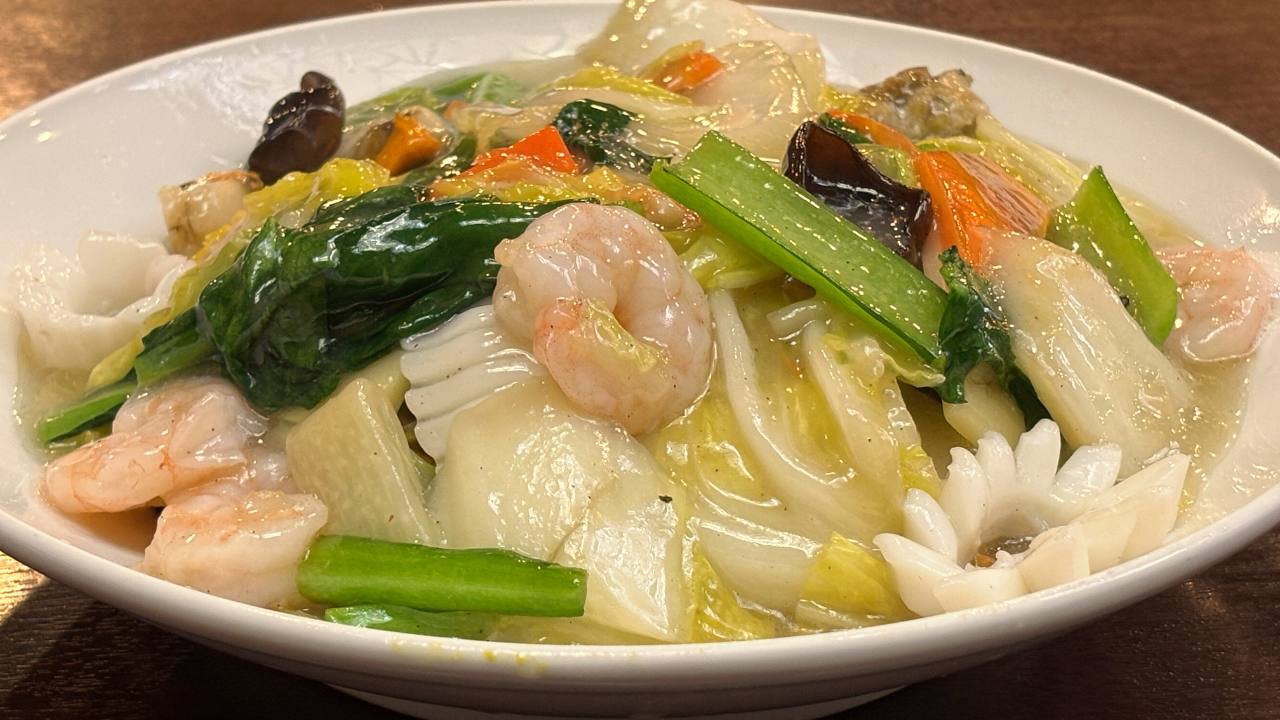
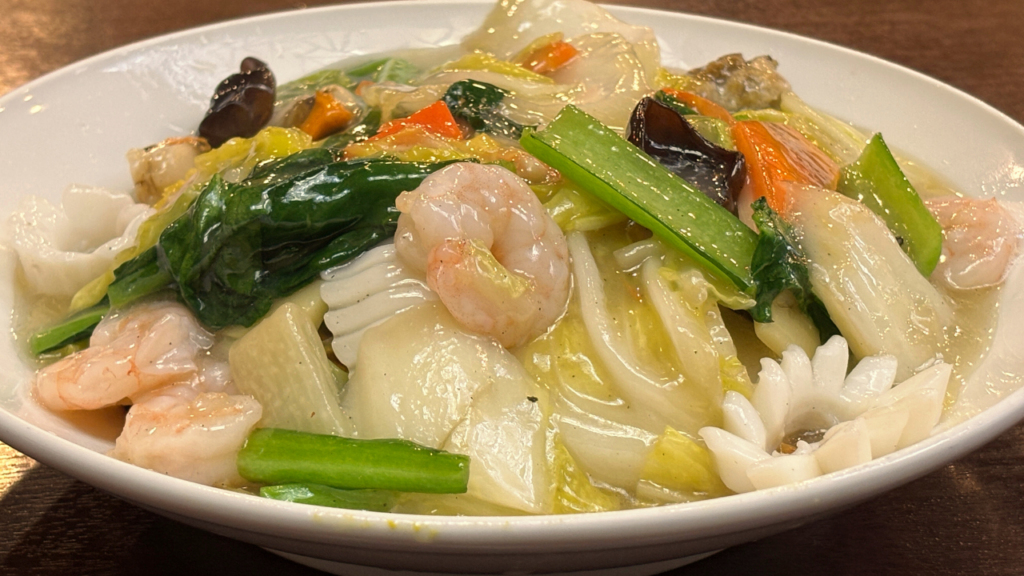
Otaru is widely known for seafood and sweets, but there is another local favorite worth noting.
Ankake Yakisoba.
Crispy noodles. Thick sauce. Comfort food energy.
Here are five reliable spots.
1. Keien
Keien sits close to Otaru Station. Easy start.
The Ankake Yakisoba uses steamed noodles rather than heavily fried ones. The texture feels softer and slightly chewy.
The sauce leans soy-based. Clean, balanced, not overpowering.
• Short walk from Otaru Station
• Mild, well-balanced sauce
• Long-running local restaurant
2. Ryuho
Ryuho is known for size.
The Ankake Yakisoba arrives as a mountain of noodles covered in thick sauce. Surprisingly light flavor despite the volume.
Ideal for big appetites.
• Very large portions
• Gentle seasoning
• Casual, relaxed setting
3. Tororian
Tororian is linked to a local noodle maker.
Thin, house-made noodles define the dish. The sauce feels lighter compared to heavier styles found elsewhere.
Easy choice for first-time Ankake Yakisoba eaters.
• House-made noodles
• Lighter overall flavor
• Comfortable atmosphere
4. Gojuban Saikan
A quieter, more local-feeling option.
The Ankake Yakisoba focuses on simplicity. Vegetables, seafood, thick sauce, classic comfort profile.
• Generous portions
• Straightforward flavors
• Long-standing neighborhood spot
5. Tenrenge
Tenrenge stands out for variety.
Multiple Ankake Yakisoba styles are available, including mixed ingredients, pork, and shrimp variations.
Good option if you want comparisons rather than a single style.
• Several Ankake Yakisoba variations
• Reasonable pricing
• Cozy, casual dining
Otaru’s Ankake Yakisoba scene ranges from light and delicate to heavy and indulgent.
The best choice depends less on rankings and more on appetite and preference.
Ankake Yakisoba refers to crispy noodles topped with thick sauce.
The noodles felt slightly firm, while the sauce added a smooth, glossy texture.
Additionally, the heat from the sauce kept the dish warm longer.
Ankake means a thick, starchy sauce.
The sauce felt silky and heavy compared to normal soup-based dishes.
For example, it often traps heat, so the surface stays hot.
The flavor feels savory and rich.
Meanwhile, the contrast between crispy noodles and soft sauce creates noticeable texture changes.
The steam rising from the sauce often felt warm on the face.
The noodles are pan-fried or deep-fried.
Therefore, the surface felt crunchy, while the inside remained slightly soft.
Additionally, the sauce slowly softens the texture over time.