


Many people notice Japanese names often appear with “-san” attached and assume it is part of the last name.
This leads to questions like:
- Why do all Japanese last names end with “-san”?
- Why does “-san” appear even in English emails?
The short answer is simple:
Japanese last names do not end with “-san.”
“-San” Is Not Part of the Name

“-san” is an honorific, not a surname ending.
- Legal name: Tanaka
- Common usage: Tanaka-san
Removing “-san” does not change the name.
It only changes the social tone.
In this way, “-san” works somewhat like “Mr.” or “Ms.” in English,
but it is more flexible and used far more often.
Why Calling a Name Without “-San” Can Feel Rude

In Japanese, using a name without an honorific often signals strong familiarity.
- With family or close friends, this is normal
- With strangers or coworkers, it can sound abrupt
Because of this, keeping “-san” is neutral and safe,
while removing it too early carries meaning.
Why “-San” Seems to Be Everywhere
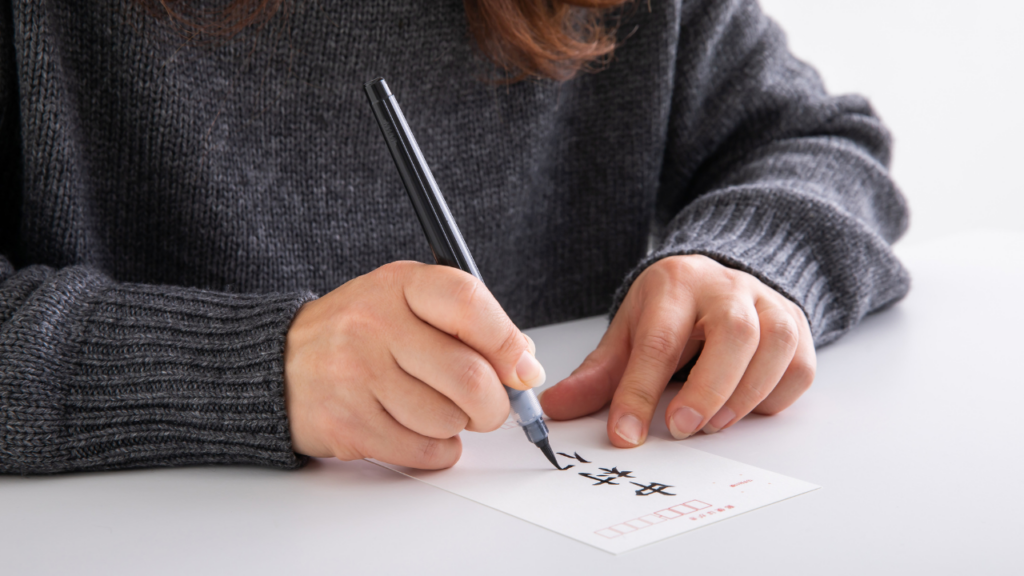
“-san” appears so often because it is:
- Gender-neutral
- Age-neutral
- Polite without being excessive
Japanese uses many honorifics, such as:
- -chan (children or affection)
- -kun (younger people or subordinates)
- -senpai (someone senior)
- -sama (strong respect, always used in letters and on envelopes)
- -sensei (professional roles)
“-san” simply stands out because it is the easiest for non-native speakers to notice.
So it is not used with every name—it is just heard most clearly.
When “-San” Should Not Be Used
One key rule is often missed:
You do not use honorifics for your own group.
When speaking to outsiders, Japanese speakers say:
- “This is Tanaka from our company.”
- Not “Tanaka-san.”
This reflects the distinction between inside (us) and outside (them).
Why “-San” Appears in English Emails

In English emails written by Japanese speakers, “-san” may appear because:
- Using only a name feels too direct
- “Mr.” or “Ms.” feels too formal
Within Japanese workplaces, this feels natural.
In international settings, it can sound unusual.
The Takeaway
- Japanese last names do not end with “-san”
- “-san” is a neutral honorific used to keep respectful distance
- It avoids social friction rather than adding decoration
- Removing it too early can sound rude
They add “-san” to keep polite distance and avoid sounding too direct.
Without it, the conversation can feel tense and quiet, even if no one gets angry.
Therefore, “-san” keeps interactions socially smooth.
Yes, it can sound rude when the relationship is not close.
Calling a name without an honorific often makes the atmosphere feel stiff, especially at work.
However, close friends and family usually drop it naturally.
Yes, “-san” works for all genders.
It feels neutral and balanced, and the tone sounds calm, not personal or distant.
That is why people use it instead of guessing Mr. or Ms.
Use “-san” unless you are very close.
“-chan” signals intimacy, and using it too early can make the other person feel uncomfortable.
Therefore, “-san” is safer in most situations.