While walking through Japanese neighborhoods,
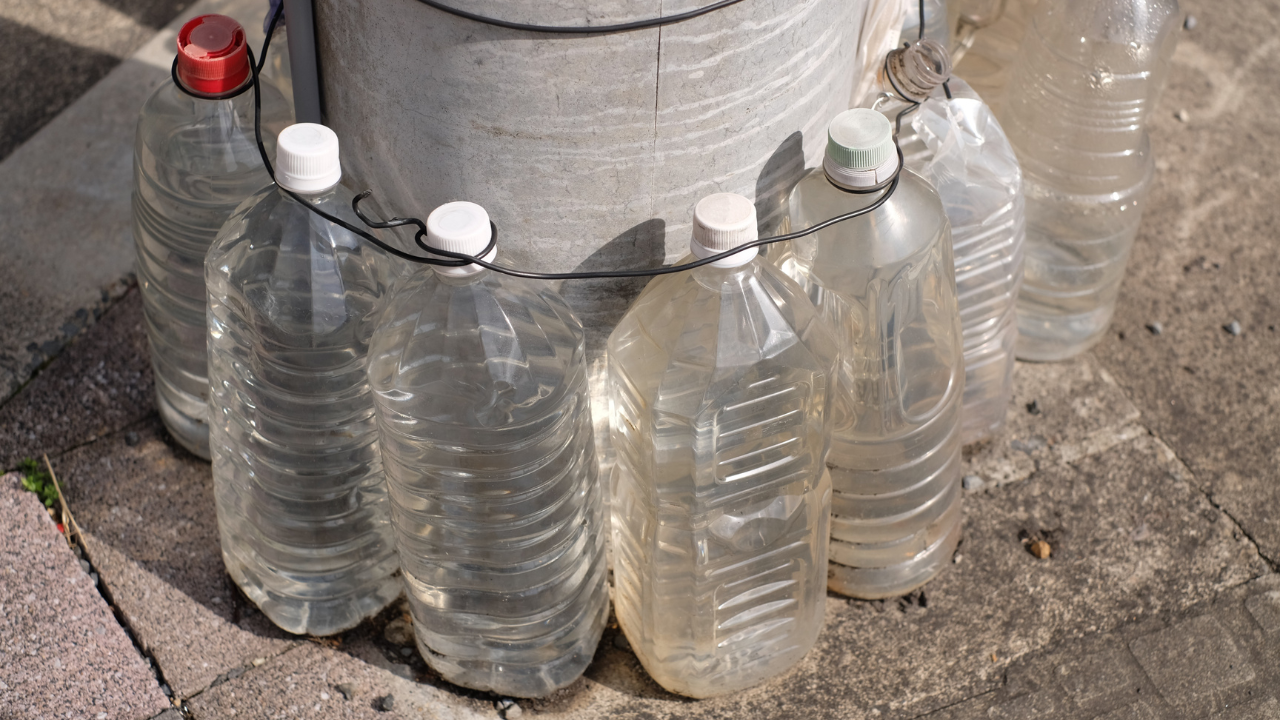
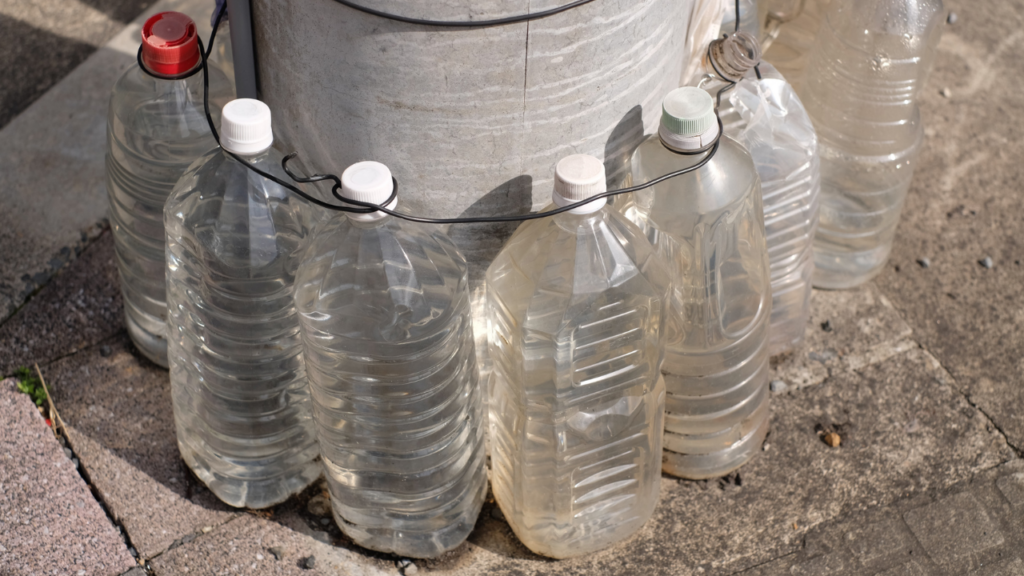
you may notice plastic bottles filled with water placed at the base of street lights, along fences, or in front of houses.
They look intentional.
They are not trash.
Yet there is usually no sign explaining why they are there.
The Common Explanation: “Cat Repellent”
In Japan, these bottles are often explained as
“nekoyoke”, which means cat repellent.
The commonly told reasons include:
- Light reflecting off the water scares cats
- Cats dislike water
- Animals avoid places near drinking water
However, these explanations are based on belief rather than evidence.
Do Water Bottles Actually Keep Cats Away?
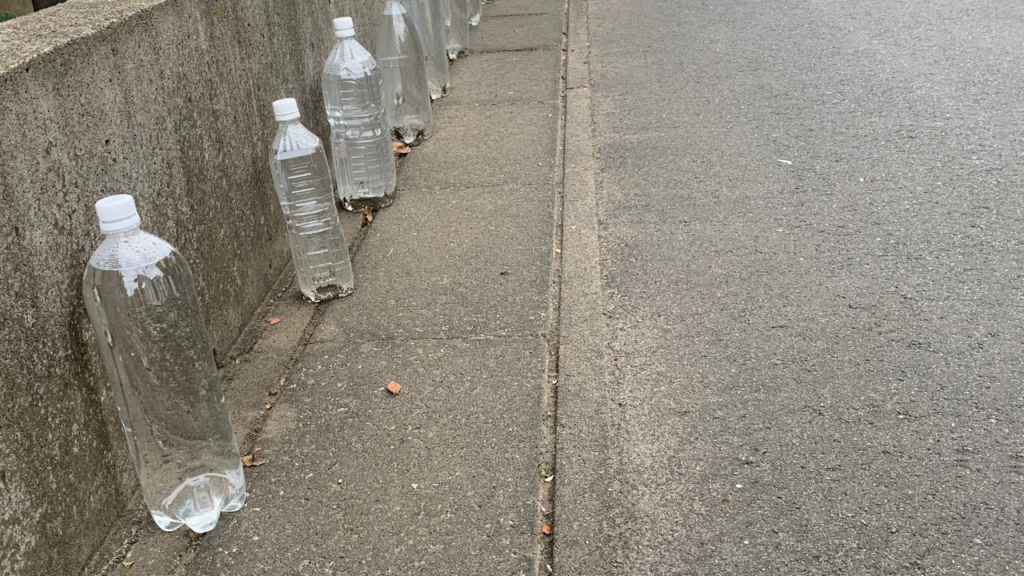
In practice, they are largely ineffective.
Cats quickly get used to them
Even if a cat hesitates at first,
it soon learns that the bottle is not a threat.
Any effect is temporary.
Reflected light does not bother cats
There is no scientific evidence that light reflections from water
are especially disturbing to cats’ vision.
Many cats simply ignore the bottles.
Sometimes the opposite happens
On sunny days, the bottles can become warm,
and cats are occasionally seen resting nearby.
A Lesser-Known Risk: Fire Hazard
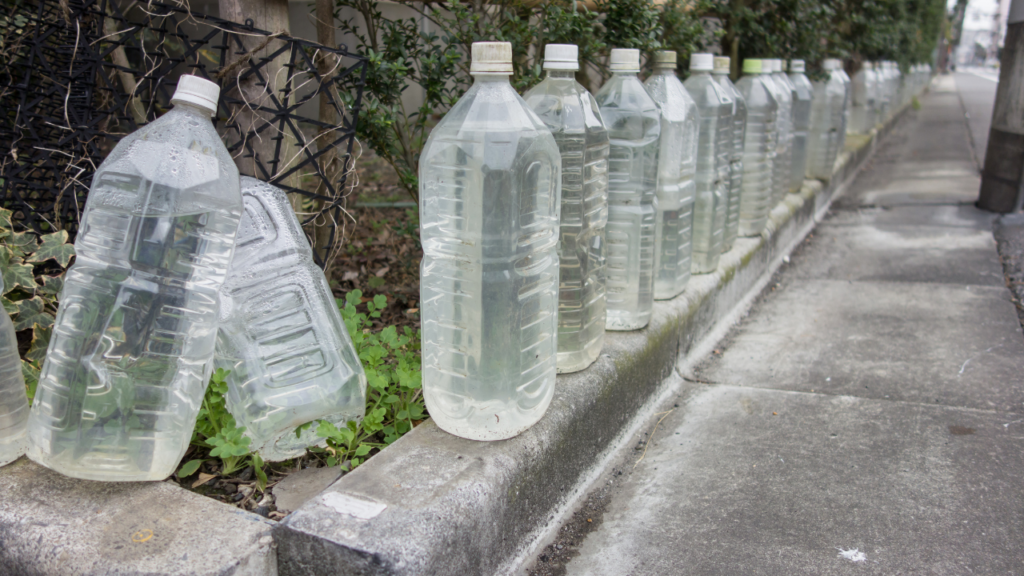
Beyond being ineffective,
water-filled plastic bottles can pose a safety risk.
Under certain conditions,
a clear bottle filled with water can act like a convex lens,
focusing sunlight onto nearby objects.
This phenomenon, known as concentrated sunlight ignition,
has caused fires involving:
- Dry leaves
- Paper
- Plastic materials
Because of this risk,
using water bottles as animal deterrents is now considered unsafe.
Why Did This Practice Spread?
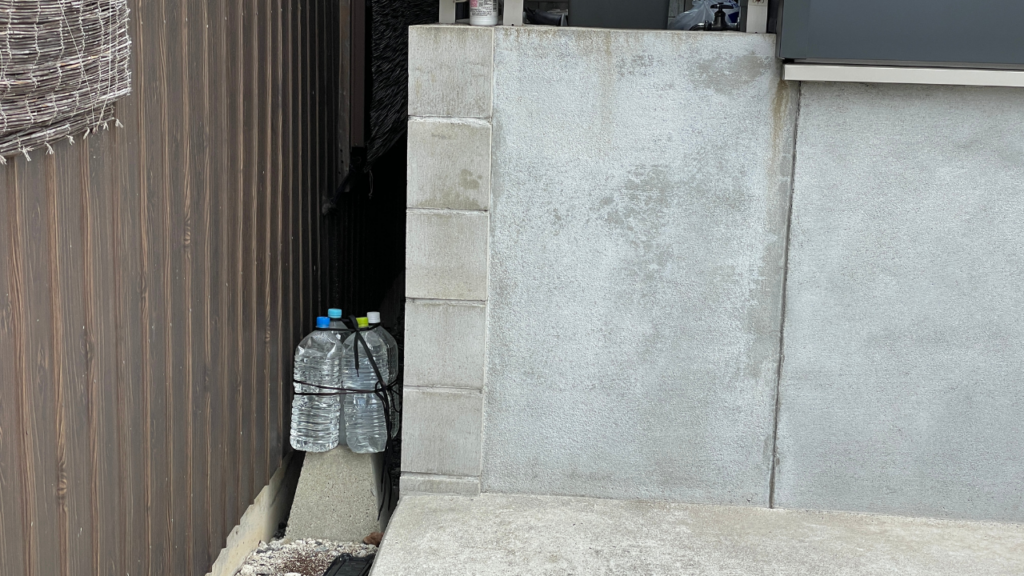
The practice became popular decades ago,
largely through television programs and word of mouth.
- Someone tried it
- It sounded logical
- Others copied it
Over time, it blended into the streetscape
without being seriously questioned.
Not Unique to Japan
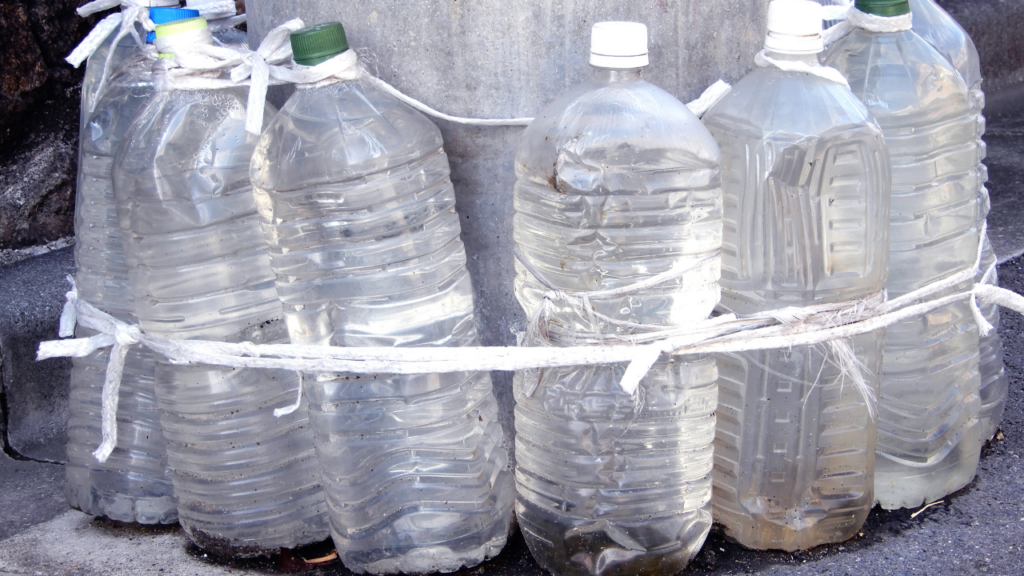
Although often associated with Japan,
similar water bottles can be found in other countries
used for the same purpose.
This suggests that the practice is less about culture
and more about how easily simple ideas spread
when they appear reasonable.
The Takeaway
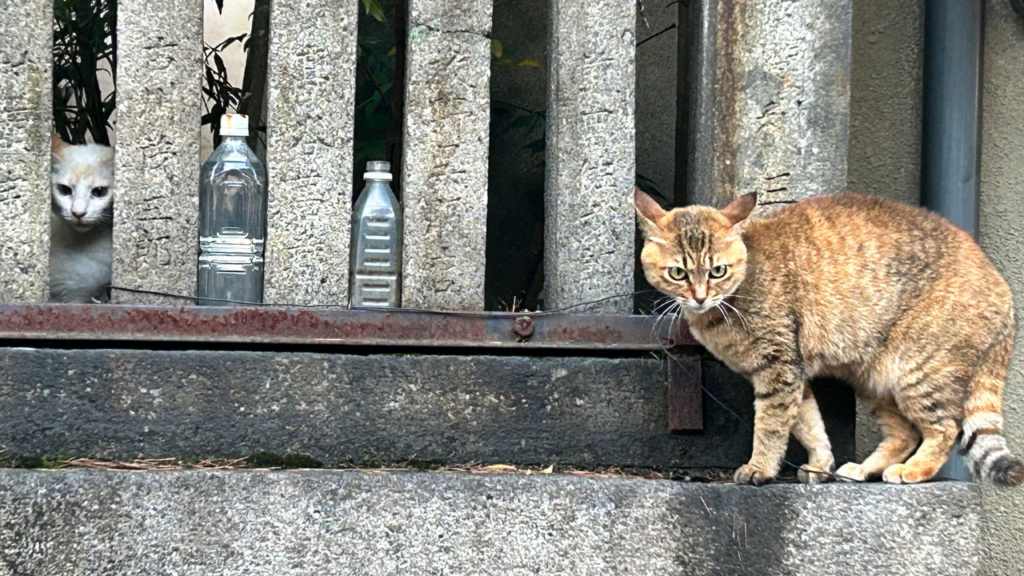
Plastic bottles filled with water on Japanese streets are:
- Commonly believed to deter cats
- Largely ineffective
- Potentially dangerous due to fire risk
- Gradually disappearing as awareness grows
They remain not because they work,
but because they once seemed to make sense.
That is why they are still sometimes seen
on the streets of Japan.
No, they do not work in a lasting way.
Cats quickly learn the bottles are harmless, and the reflected light does not feel strong to their eyes.
As a result, their behavior usually returns within days.
People assume sudden reflections disturb animals.
However, the light from water bottles feels weak and normal, even in direct sunlight.
Therefore, cats do not react as if they sense danger.
Yes, they can create safety risks.
In strong sun, the bottle surface can feel hot, because it focuses light like a lens.
In rare cases, nearby dry materials have overheated.
The idea spread because it sounded reasonable and cost nothing.
Meanwhile, the area stays visually quiet and unchanged, so people rarely question it.
As awareness grows, the practice slowly disappears.