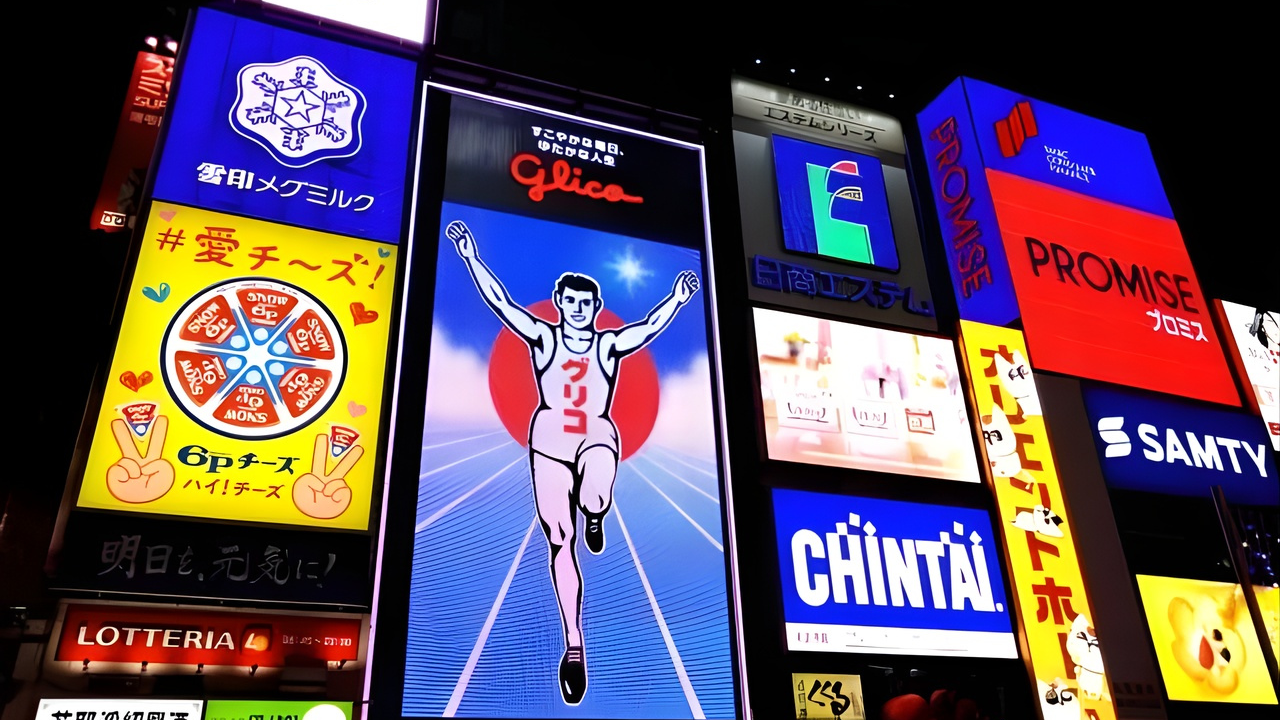
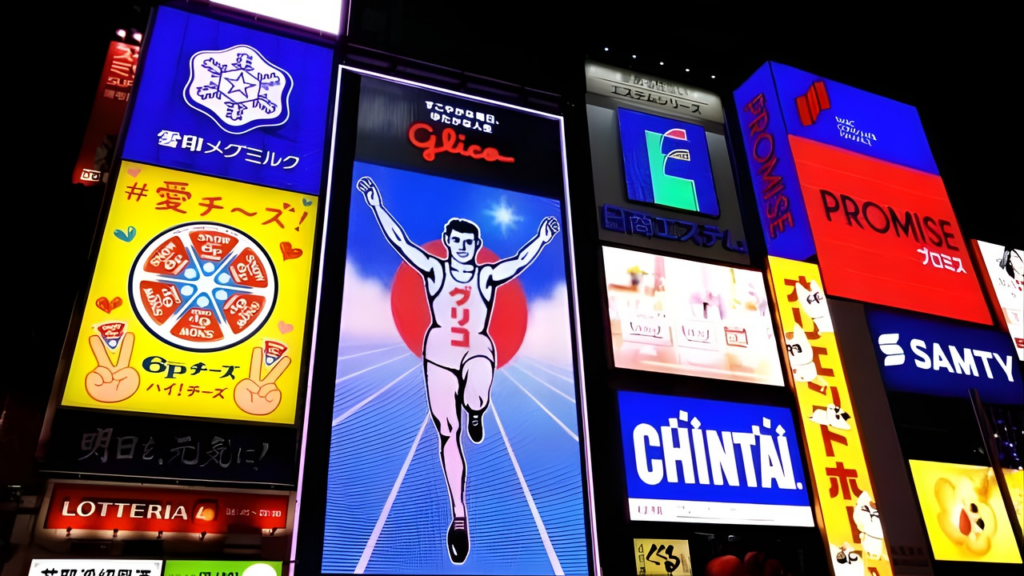
The Glico Running Man Sign stands in Dotonbori, Osaka.
It sits next to Ebisu Bridge.
It shows a runner crossing a finish line.
This image has become one of Osaka’s most recognizable scenes.
Location
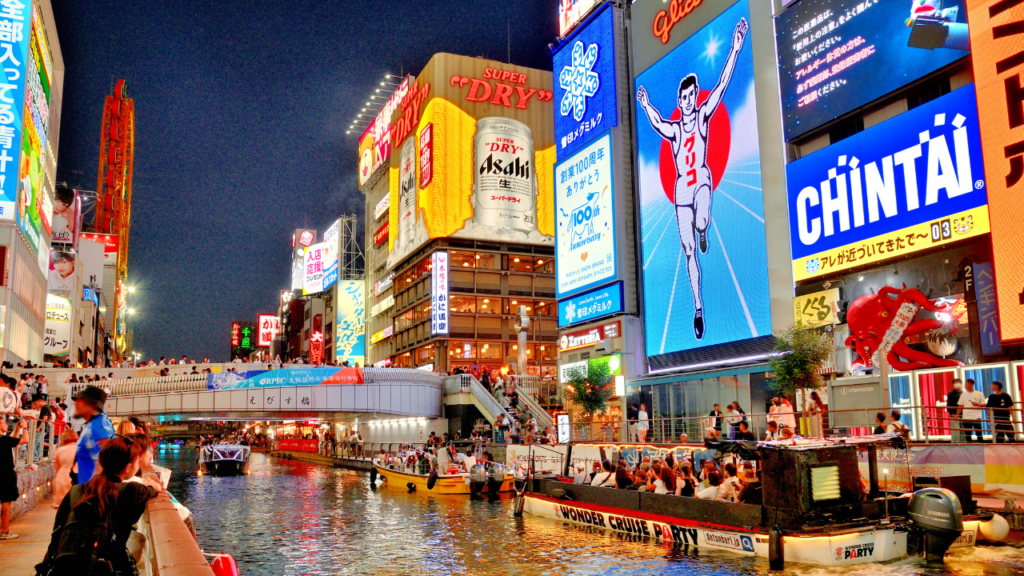
The sign stands in Dotonbori, Chuo Ward, Osaka.
It faces the Dotonbori Canal.
Ebisu Bridge sits directly in front of it.
As a result, many visitors take photos from the bridge.
Design
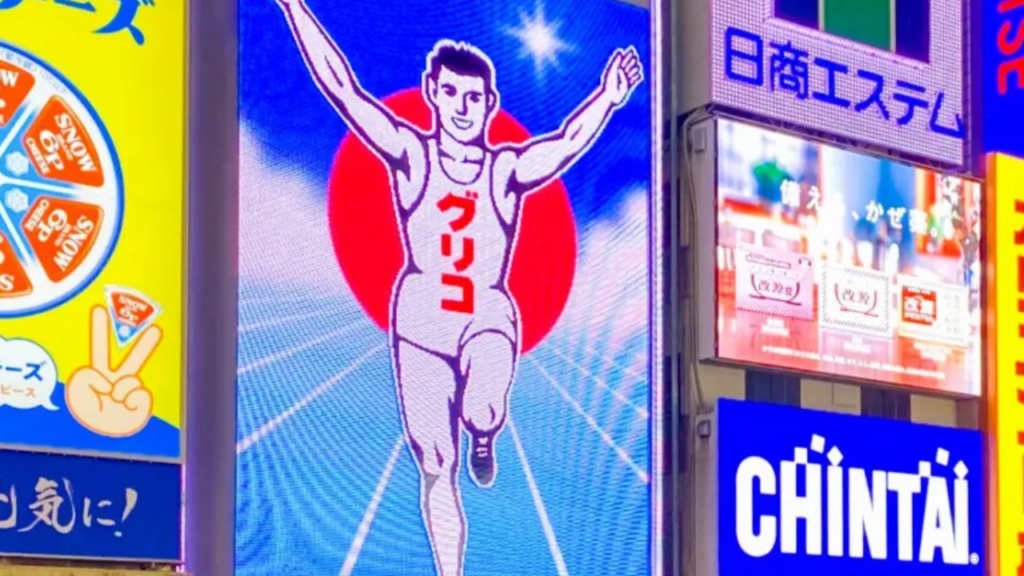
The current sign is the sixth version.
It uses an LED display with about 140,000 lights.
The runner moves across a blue track.
Meanwhile, the background changes over time.
For example, Osaka Castle and Tsutenkaku Tower appear in rotation.
Because of this motion, the sign functions as both an advertisement and a visual landmark.
Lighting Hours
The sign lights up from sunset until 24:00.
Therefore, it plays a major role in the nighttime scenery of Dotonbori.
History
The first sign appeared in 1935.
Since then, Glico has replaced and updated the design several times.
The sixth version began operation in 2014.
Additionally, Osaka City designated the sign as an official landscape feature in 2003.
Origin of the Runner Design
The runner image has a specific origin.
Glico founder Riichi Ezaki created the design.
He reportedly saw a child crossing a finish line.
As a result, he adopted the image as the company’s symbol.
The pose connects directly to Glico’s famous phrase:
“One piece, 300 meters.”
Why the Sign Feels Memorable
Many cities have large advertisements.
However, the Glico sign feels different.
It no longer functions as a simple billboard.
Instead, it has merged with the identity of Osaka.
Because of this, the image often represents Dotonbori itself.
FAQ
The sign lights up at sunset and turns off at 24:00.
The sixth-generation LED version has operated since 2014.
The pose represents a runner crossing a finish line.
It also reflects Glico’s long-standing brand image.