
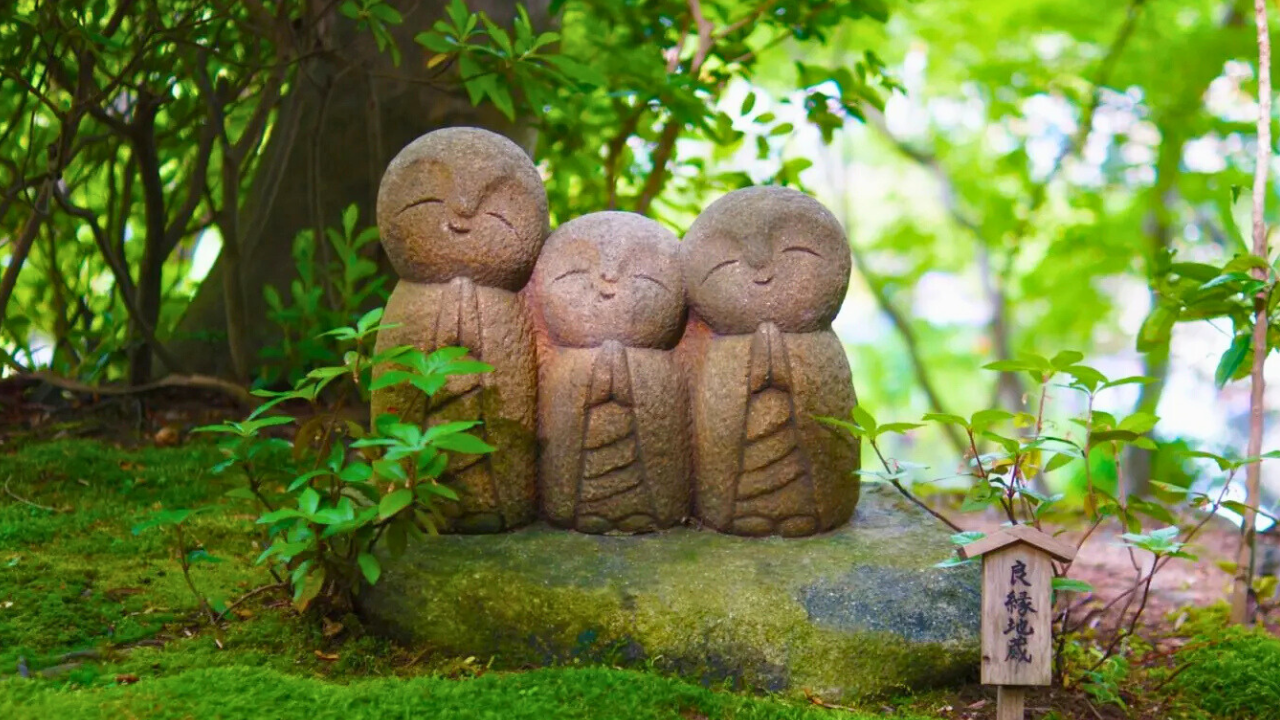
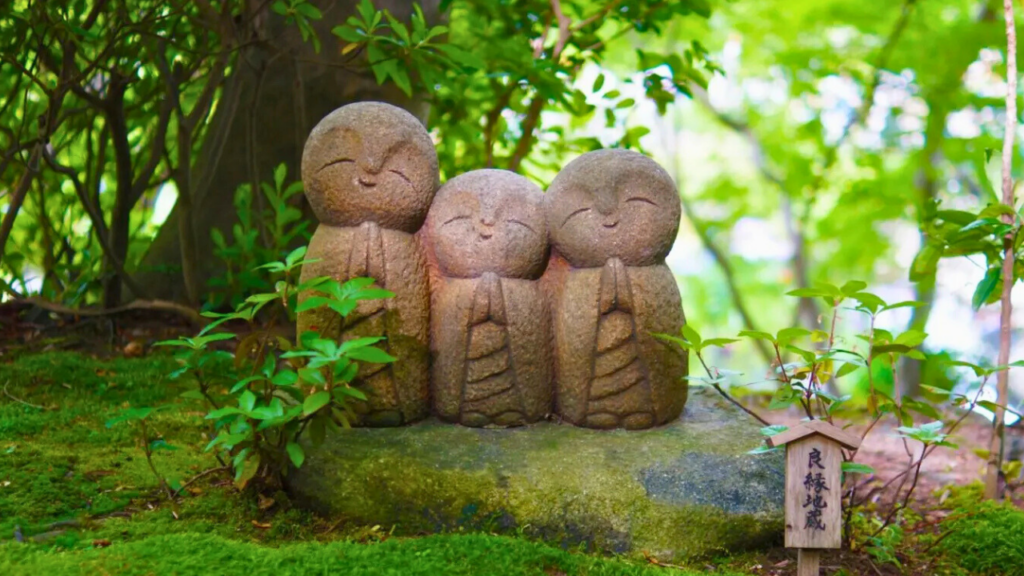
When walking in Japan, you may notice small stone statues along roads, in temples, or near neighborhoods. Many wear red hats or bibs. People call these statues Ojizo-san.
Ojizo-san represents Jizo, a well-known Buddhist guardian.
The Role of Ojizo-san
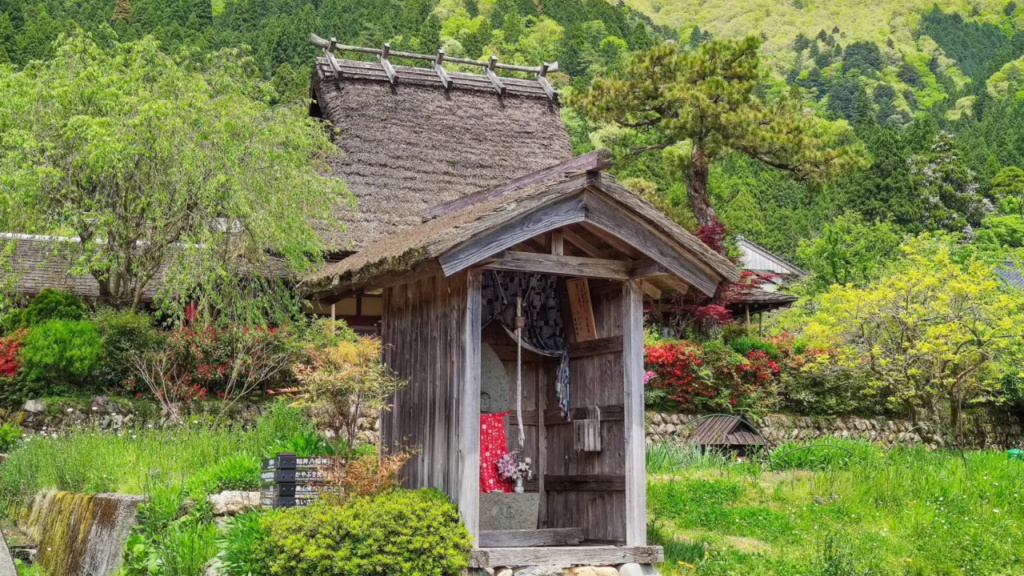
Ojizo-san is known as a protector. Many people believe Jizo watches over:
- Travelers
- Children
- Lost or wandering souls
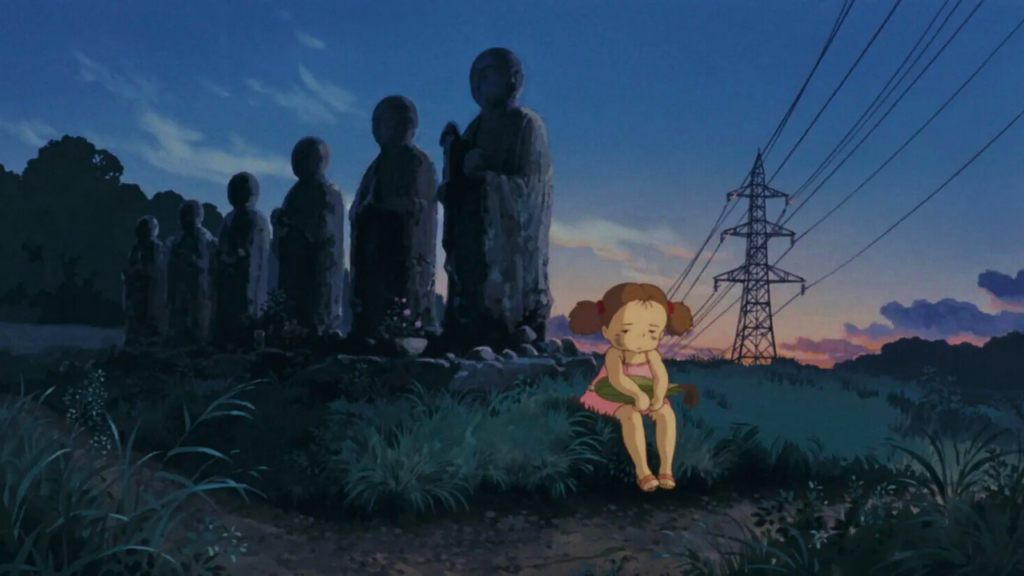
Because of this belief, statues often appear near roads, bridges, and pathways.
For everyday life, Ojizo-san symbolizes safety and kindness.
Why the Red Hat and Bib?
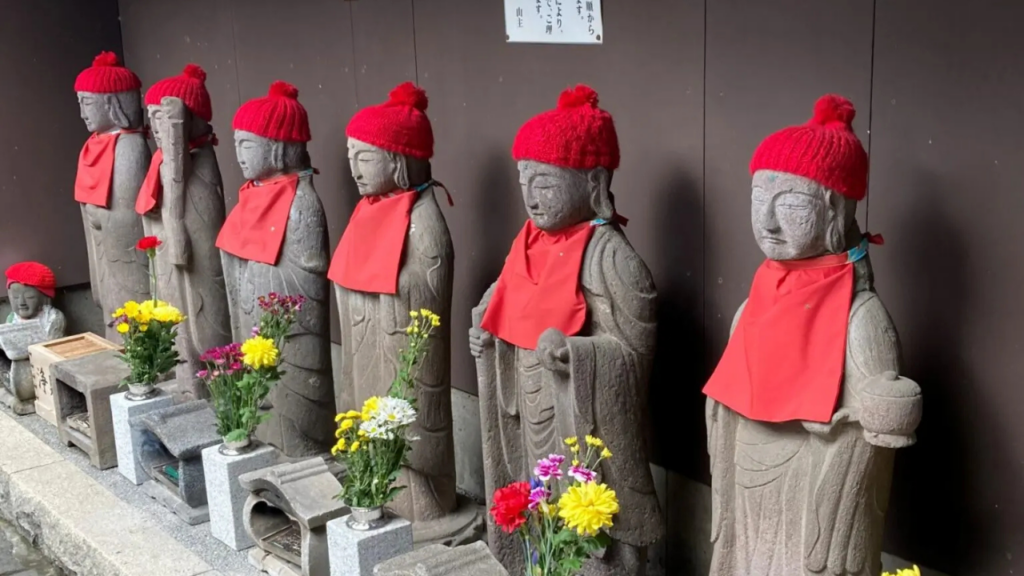
The red clothing has meaning. In Japan, red is traditionally associated with protection.
People dress Ojizo-san in red to pray for:
- Children’s safety
- Health
- Protection from misfortune
The simple visual detail carries strong cultural symbolism.
Offerings and Surroundings
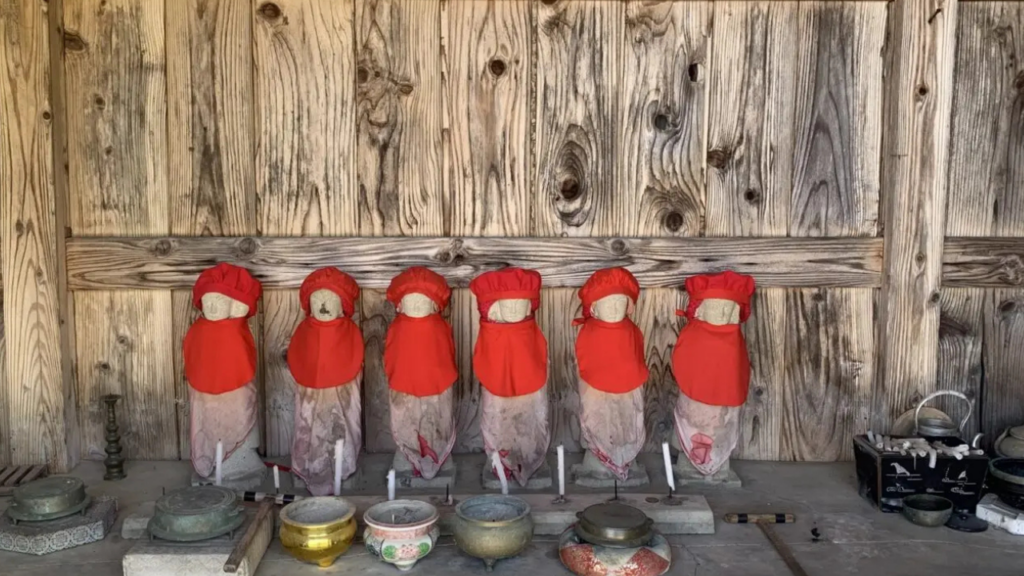
You may see flowers, small toys, or food near the statues. These offerings reflect remembrance and prayer, especially connected to children.
The atmosphere around Ojizo-san often feels quiet and reflective.

Where You’ll See Ojizo-san
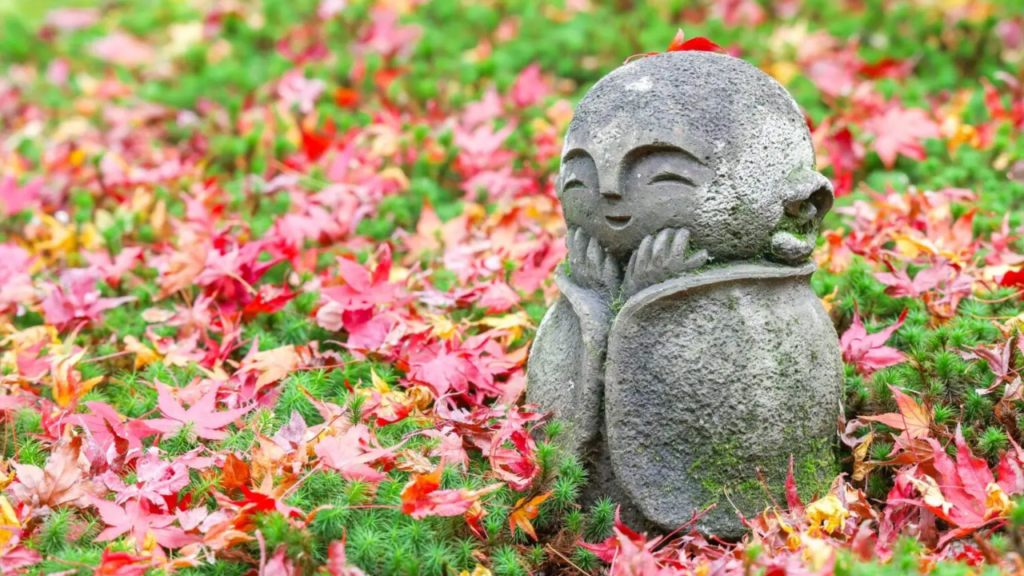
Unlike major landmarks, Ojizo-san appears almost everywhere:
- Temple grounds
- Residential streets
- Mountain trails
- Rural villages
They function as part of daily scenery rather than tourist attractions.
Why Ojizo-san Matters
Ojizo-san provides a glimpse into everyday spirituality in Japan. The statues are small, but their presence is deeply tied to ideas of protection, compassion, and peace.
Many visitors notice that encountering Ojizo-san feels unexpectedly calming.
FAQ
Ojizo-san represents Jizo, a Buddhist guardian linked to protection and guidance.
Red traditionally symbolizes protection and safety.
Yes, but respectful behavior is expected, especially at temples.