
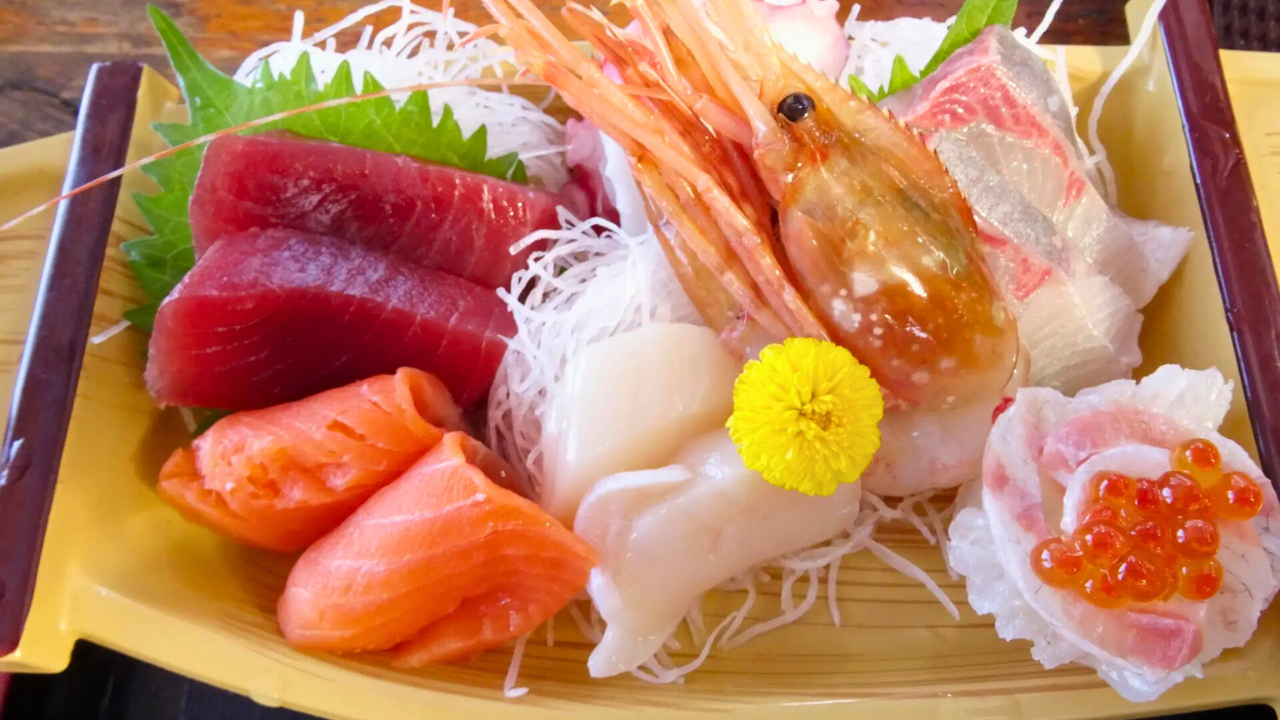
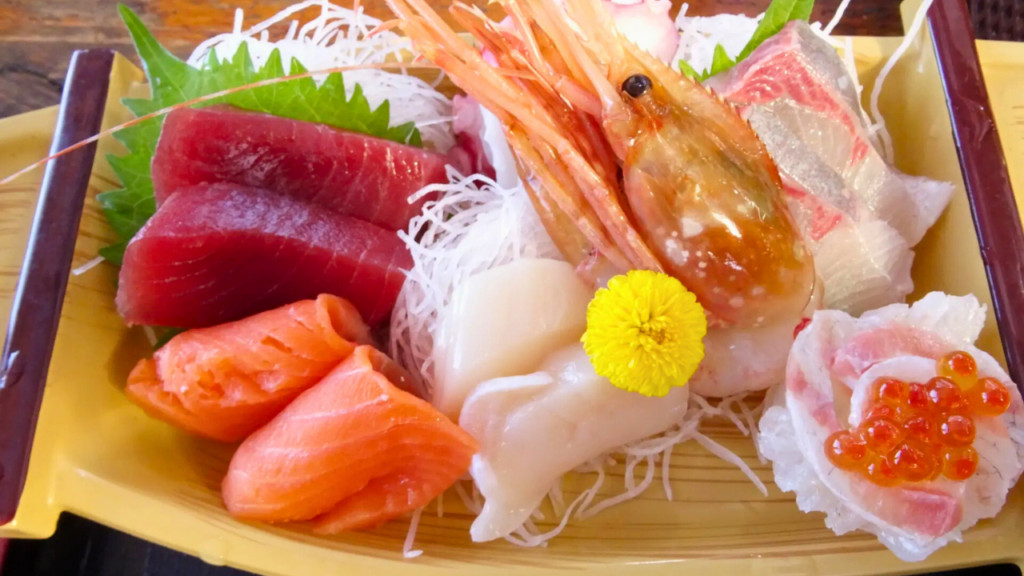
If you’re visiting Japan, you’ve probably heard of sushi. Washoku includes many dishes, and sashimi is something slightly different.
Although both dishes often appear together, they are not the same.
What is Sashimi?
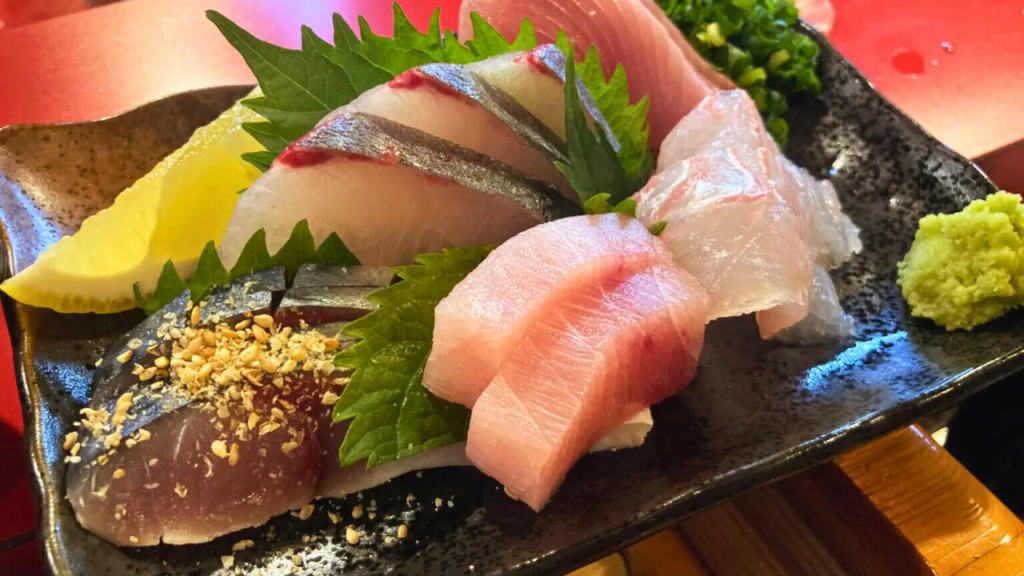
Sashimi is thinly sliced raw fish or seafood served without rice.
Unlike sushi, which combines seafood with vinegared rice, sashimi focuses entirely on the ingredient itself. The goal is simple: to enjoy the pure taste, texture, and freshness of the fish.
Sashimi is typically eaten with:
- Soy sauce
- Wasabi
- Grated daikon (white radish)
These condiments enhance the flavor without overpowering it.
Key Characteristics of Sashimi
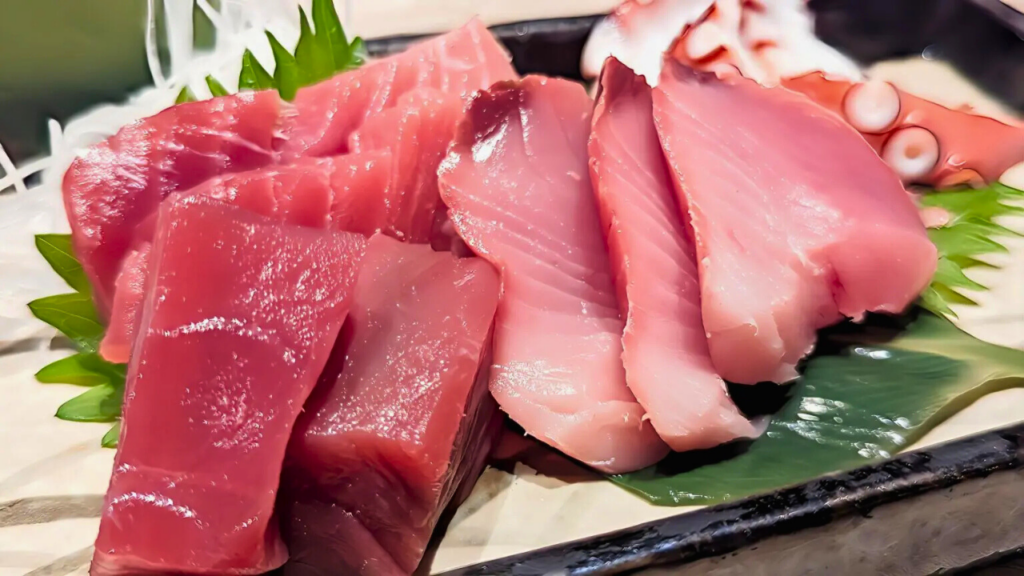
Freshness Comes First
Sashimi relies on extremely fresh, high-quality seafood. There is no heavy seasoning or cooking to mask imperfections.
Minimalist Presentation
The dish is visually simple. Thin slices of fish are arranged neatly on a plate.
No Rice
This is the most important distinction from sushi. Sashimi is seafood only.
Sashimi vs. Sushi
| Feature | Sashimi | Sushi |
|---|---|---|
| Raw Fish | Yes | Sometimes |
| Rice | No | Yes (vinegared rice) |
| Condiments | Soy sauce, wasabi, daikon | Soy sauce, wasabi, pickled ginger |
| Serving Style | Sliced fish on a plate | Fish on rice or rolled |
Common Types of Sashimi
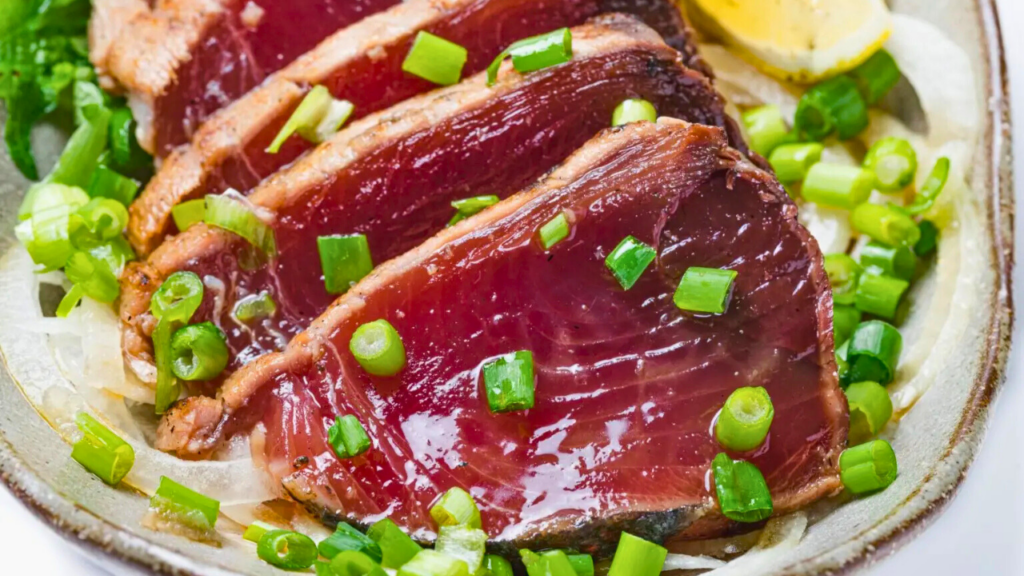
Maguro (Tuna)
Rich, clean flavor. One of the most popular choices.
Salmon
Soft texture with a mild, slightly sweet taste.
Hamachi (Yellowtail)
Smooth and fatty with a delicate flavor.
Ebi (Shrimp)
Served raw or lightly boiled depending on the type.
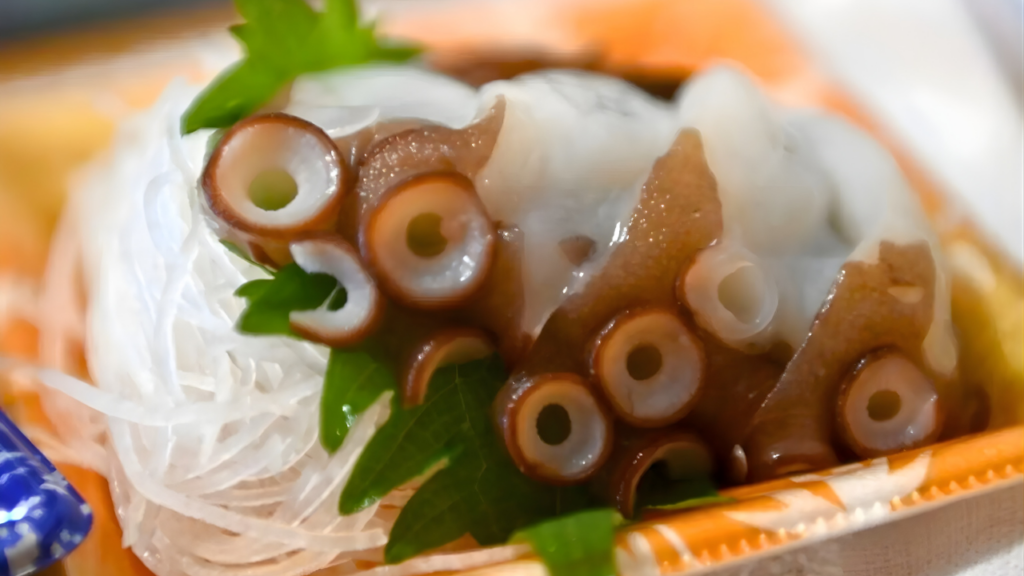
Ika (Squid) / Tako (Octopus)
Chewy texture, often surprisingly enjoyable for first-time visitors.
Where to Try Sashimi in Japan
Sushi Restaurants
Most sushi restaurants also offer sashimi.
Izakaya
Casual dining spots ideal for pairing sashimi with drinks.
Fish Markets
Places known for exceptionally fresh seafood.
Japan’s geography plays a major role. Surrounded by the sea, fresh fish is widely available across the country. Many people associate top-quality seafood with northern regions, especially Hokkaido.
Why Try Sashimi?
Direct Taste of Japanese Cuisine
Sashimi offers one of the most straightforward ways to experience Japanese food culture.
Nutritional Benefits
High in protein and often rich in omega-3 fatty acids.
Texture Experience
Beyond flavor, sashimi highlights the texture of different seafood.
Choosing Where to Eat
Japan maintains strict food safety standards, particularly for raw seafood.
Even so, selecting a well-visited restaurant is a sensible approach. High customer turnover generally indicates freshness and consistent quality.
Food poisoning can disrupt any trip. Prioritizing reputable establishments reduces that risk.
FAQ
Yes. Japan enforces strict handling and safety regulations for seafood.
Many restaurants offer cooked or lightly seared options.
No. Wasabi is optional. Soy sauce alone is perfectly acceptable.