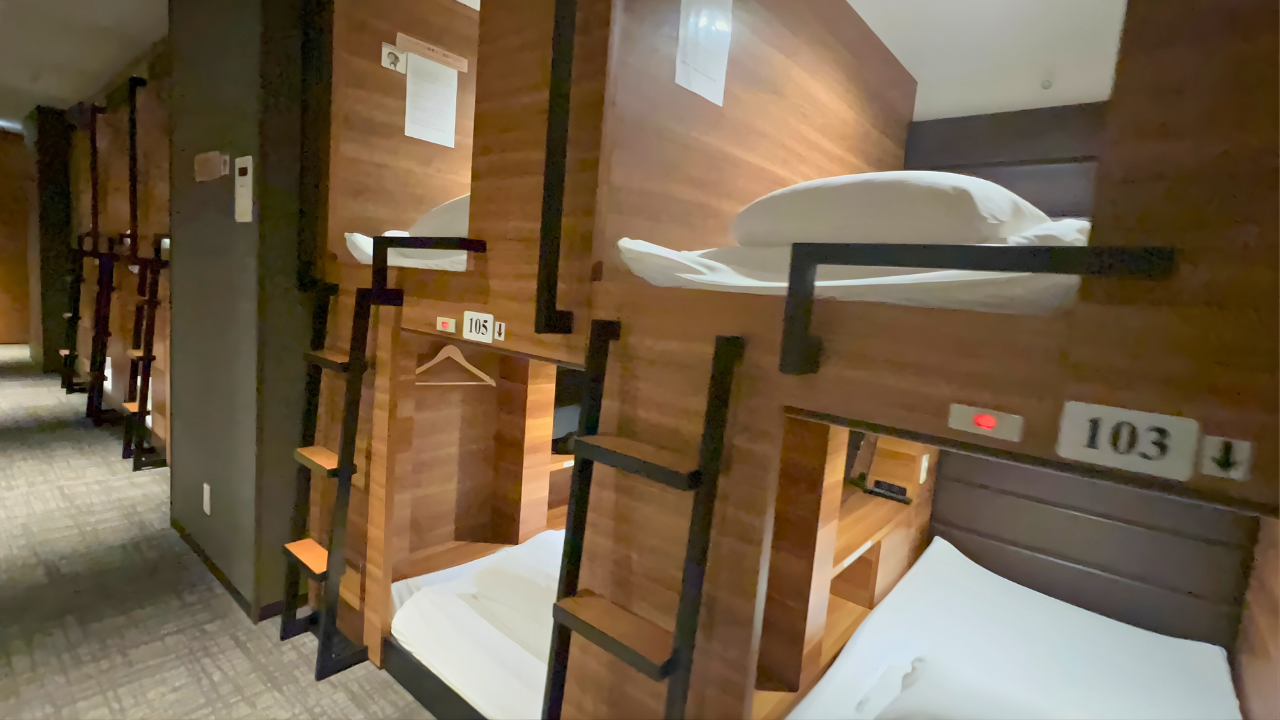
A capsule hotel is a unique type of accommodation that started in Japan.
It uses space efficiently and offers a low-cost place to sleep.
At first glance, it may look futuristic.
However, it is simply a practical and affordable way to stay overnight.
What Is a Capsule Hotel?
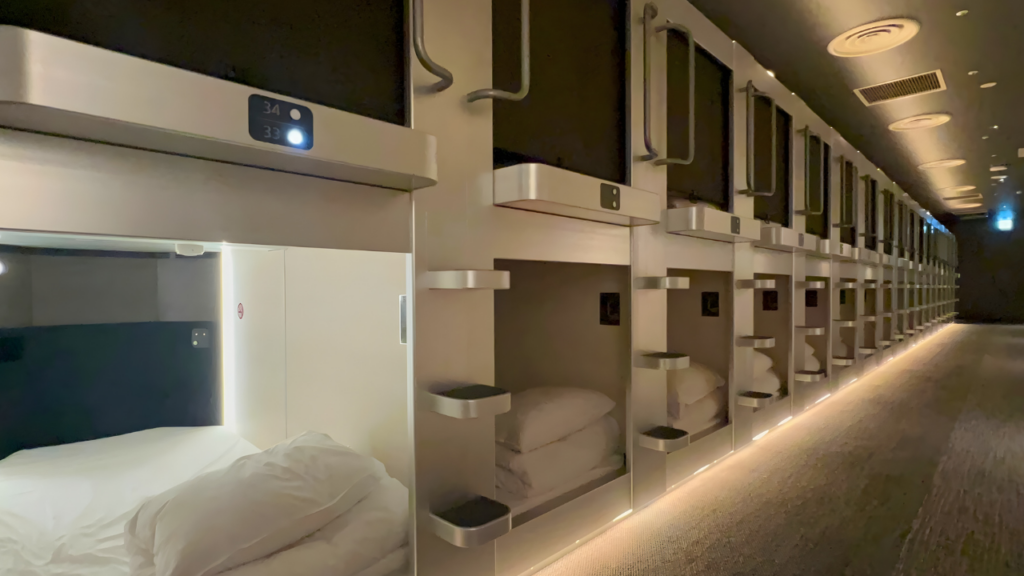
In a capsule hotel, each guest uses a small space called a “capsule.”
- About the size of a single bed
- Closed with a curtain or roll screen
- Not a fully private room
Capsules are usually arranged in two levels (upper and lower).
This design allows efficient use of limited space.
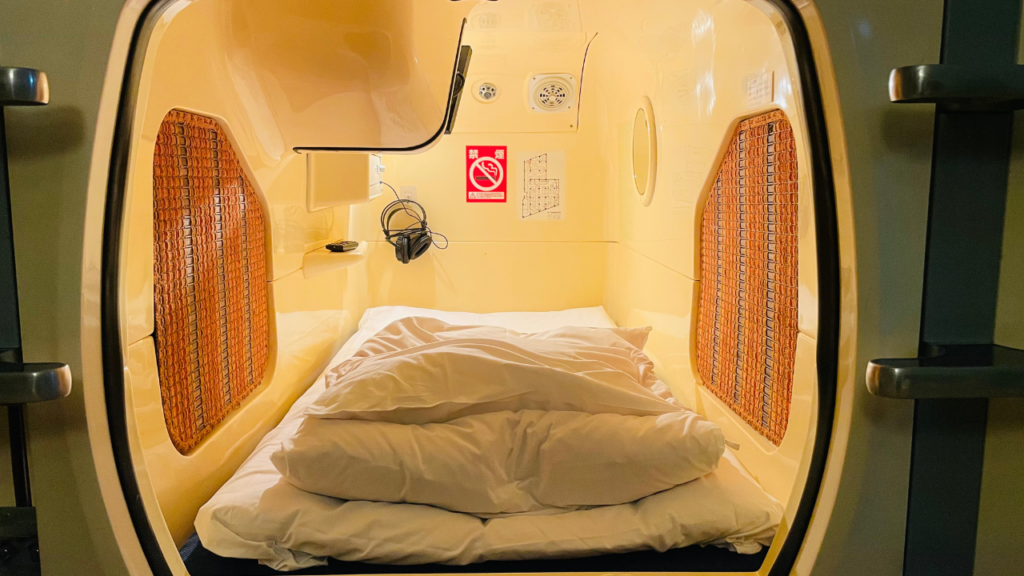
Inside the capsule, you will usually find:
- Power outlet
- Light
- Air conditioning
Meanwhile, luggage is stored in a locker, not inside the capsule.
Why Capsules Do Not Have Locks
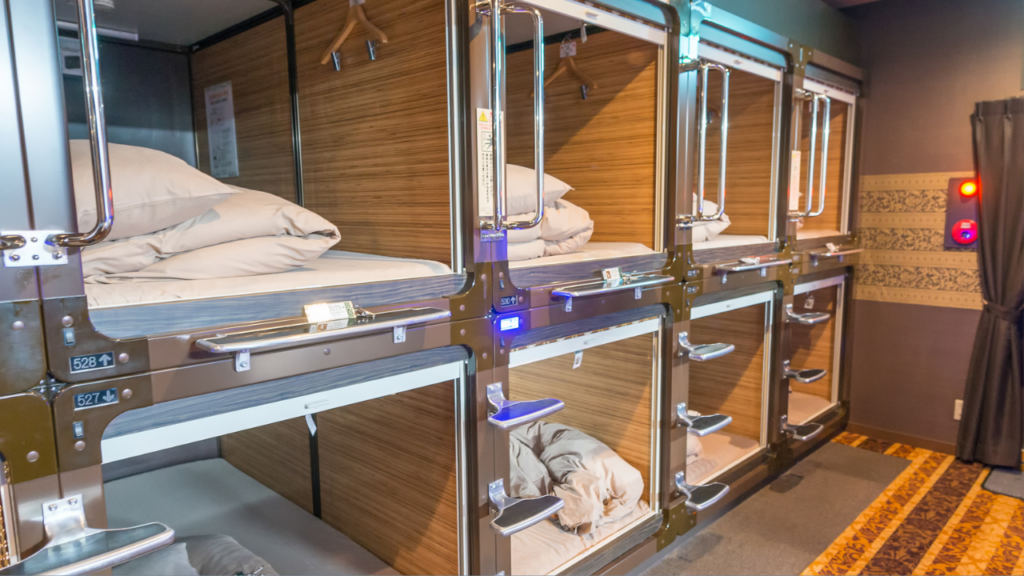
Capsules do not have locks on the entrance.
This is for safety reasons.
In case of fire or emergency, people must exit quickly.
Therefore, most capsules use:
- Curtains
- Roll screens
instead of doors with locks.
Managing Valuables (Important)
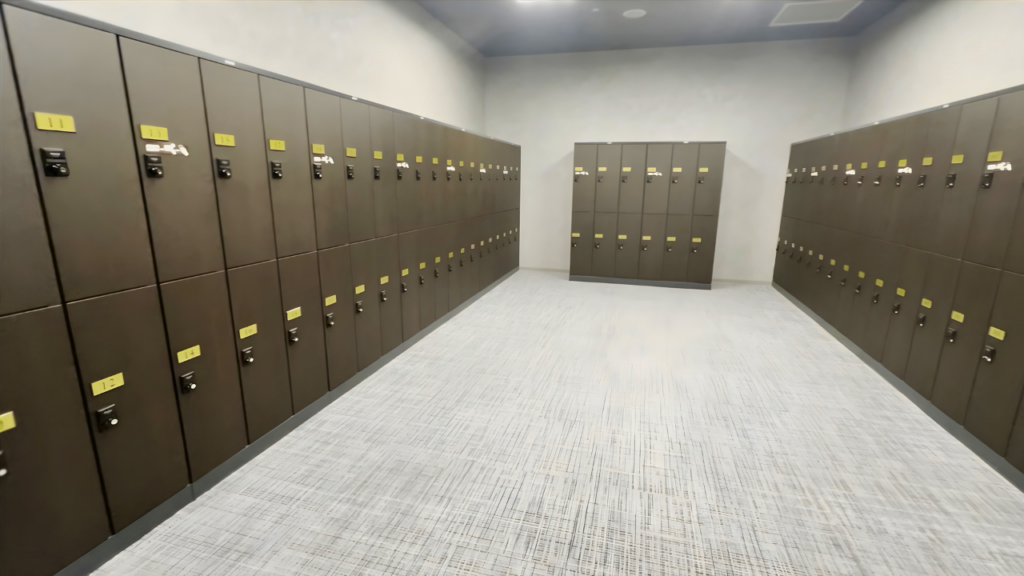
Guests store valuables in lockers.
Lockers
Most capsule hotels provide lockable lockers.
- About the size of a changing room locker
- Large enough for suits or coats
However, in some hotels, lockers are located in areas without direct staff supervision.
Because of this, some guests may feel concerned.
Front Desk Storage
Many capsule hotels offer storage at the front desk.
You can leave:
- Passport
- Cash
- Valuable items
This option helps reduce security concerns.
Changing Room Lockers
Some facilities also have lockers in the changing area near showers or baths.
This allows you to store:
- Wallet
- Smartphone
while using the bath.
If these lockers are not available, you need to leave valuables in your main locker before using the bath.
Security
Capsule hotels do not offer private rooms.
Instead, they use controlled access for shared areas.
Floor Access Control
The entrance to the sleeping floor usually requires a key.
- Card key
- Sensor-based key
In many cases, this key is combined with the locker key.
Separate Areas
Many capsule hotels separate areas by gender.
Each area requires a key to enter.
This prevents unauthorized access and improves safety.
History
The first capsule hotel opened in Osaka in 1979.
Today, capsule hotels exist across Japan and in other countries.
▶ Official Website: Capsule INN OSAKA
Price
Capsule hotels are cheaper than standard hotels.
- About 2,000 to 5,000 yen per night (13–33 USD)
Prices may increase during busy travel seasons.
Who Uses Capsule Hotels?
Typical users include:
- Business travelers
- People who missed the last train
- Travelers who want a low-cost stay
Recently, more international tourists use them as well.
Showers and Toilets
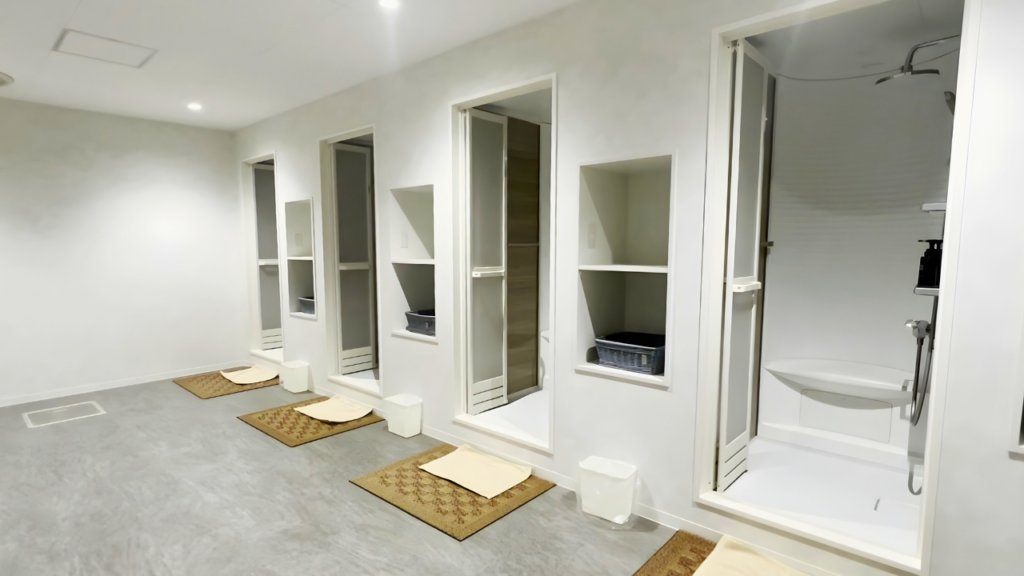
Capsules do not include toilets or showers.
Instead, hotels provide:
- Shared toilets
- Shared showers or public baths
In a Japanese-style bath:
- Wash your body first
- Then enter the bathtub
Soap and shampoo are usually provided.
Are Capsules Too Small?
Typical capsule size:
- Width: about 1.2 meters
- Length: about 2 meters
- Height: about 1 meter
There is enough space to lie down and sit.
However, the space is enclosed.
People who dislike small spaces may feel uncomfortable.
Can Couples Stay?
Capsule hotels are mainly for single guests.
However, some places offer:
- Mixed dormitory areas
- Larger capsule-style rooms
Where Are Capsule Hotels Found?
Capsule hotels are available across Japan.
However, they are most common in:
- Large cities like Tokyo and Osaka
- Busy areas such as Shinjuku or Namba
- Near stations and airports
Summary
A capsule hotel is:
- Low-cost
- Simple
- Efficient
Although it is not a private room,
security is managed through lockers and controlled access.
It is a practical option for short stays and solo travel in Japan.