
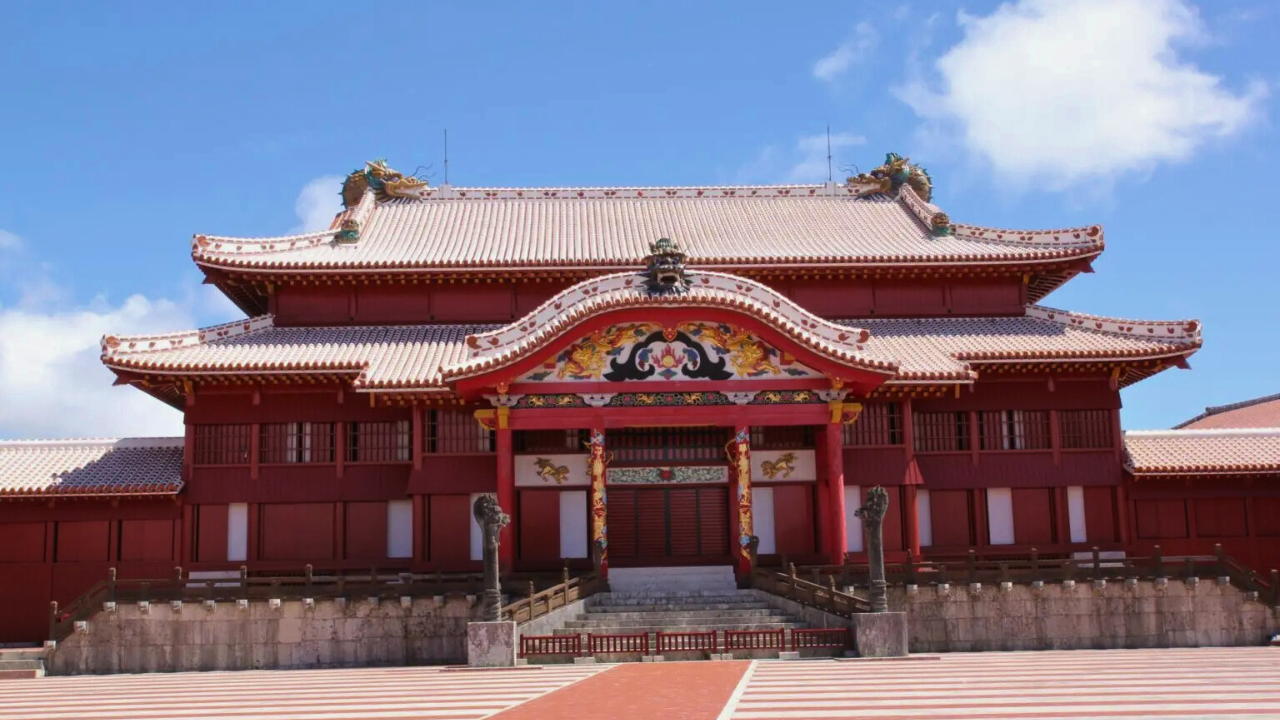
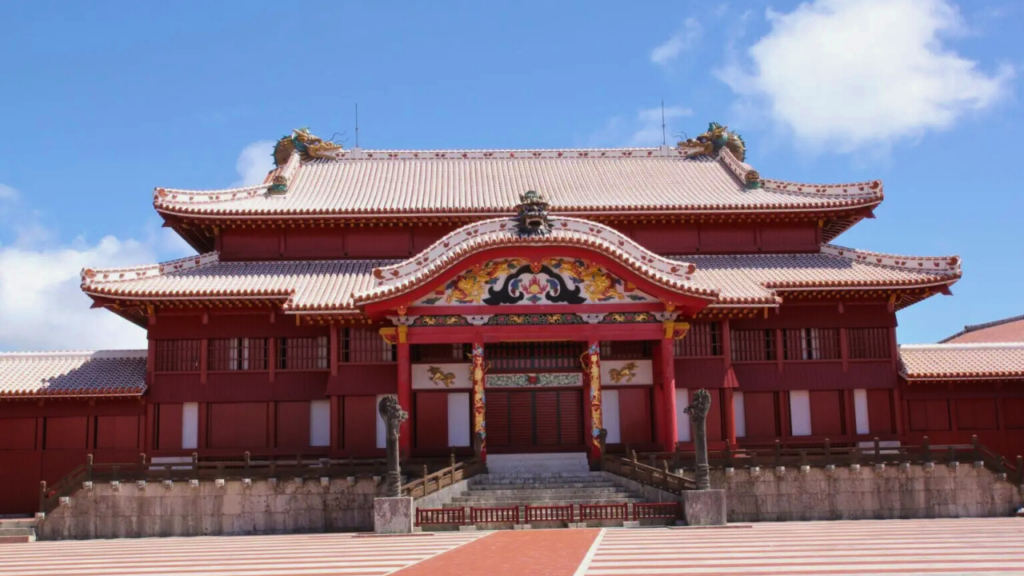
Shurijo Castle is a historic castle in Naha, Okinawa.
It was the political and cultural center of the Ryukyu Kingdom for several centuries.
Today, the site is part of the UNESCO World Heritage listing known as the Gusuku Sites and Related Properties of the Ryukyu Kingdom. Because of this history, Shurijo Castle is one of the most important cultural landmarks in Okinawa.
Main Highlights of Shurijo Castle
Seiden (Main Hall)
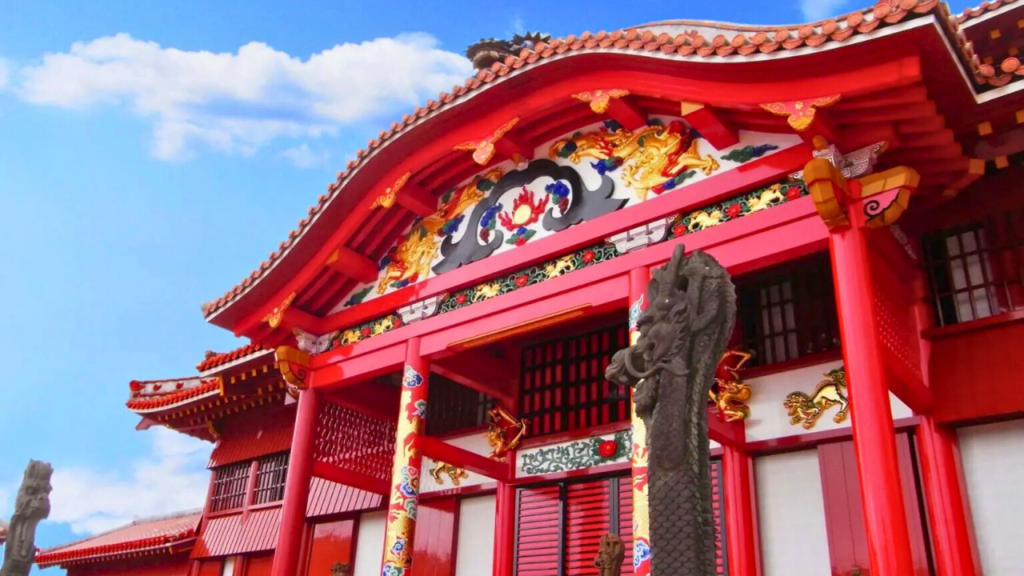
The Seiden was the central building of Shurijo Castle.
It served as the royal palace of the Ryukyu kings and the location for official ceremonies.
The architecture shows a unique style that combines Japanese and Chinese influences, which reflects Okinawa’s history as a trading kingdom.
The original red building became one of the most recognizable symbols of Okinawa.
In October 2019, a large fire destroyed several buildings, including the Seiden (Main Hall). Restoration work is currently in progress, and the main reconstruction is scheduled to finish in autumn 2026.
Even during reconstruction, visitors can still walk around the castle grounds, see historic gates and stone walls, and learn about the rebuilding process through exhibitions.
Stone Walls
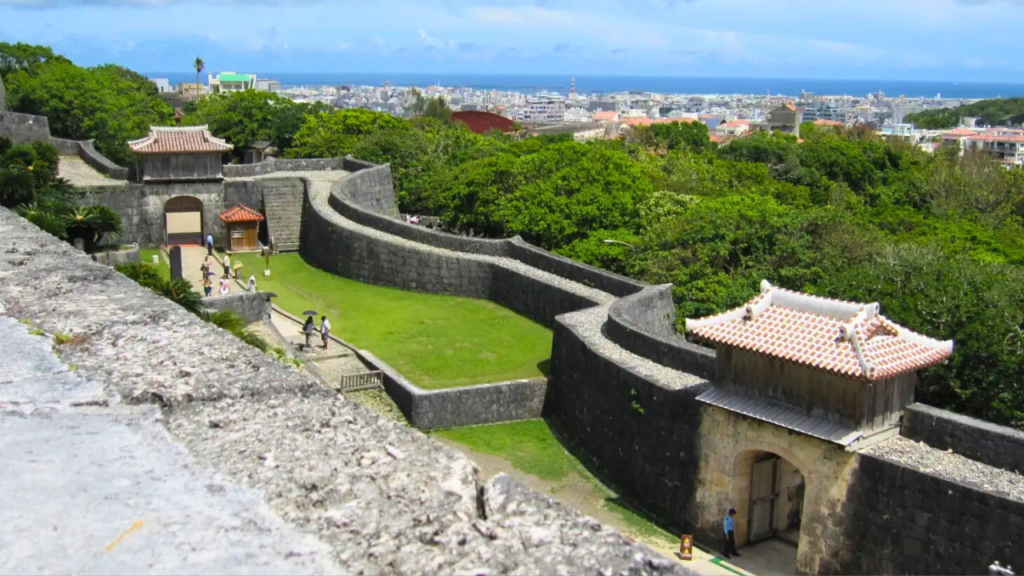
Shurijo Castle is surrounded by curved stone walls built with traditional Ryukyu masonry techniques.
These walls follow the natural shape of the hill.
From some areas, visitors can see wide views of Naha city.
Shureimon Gate
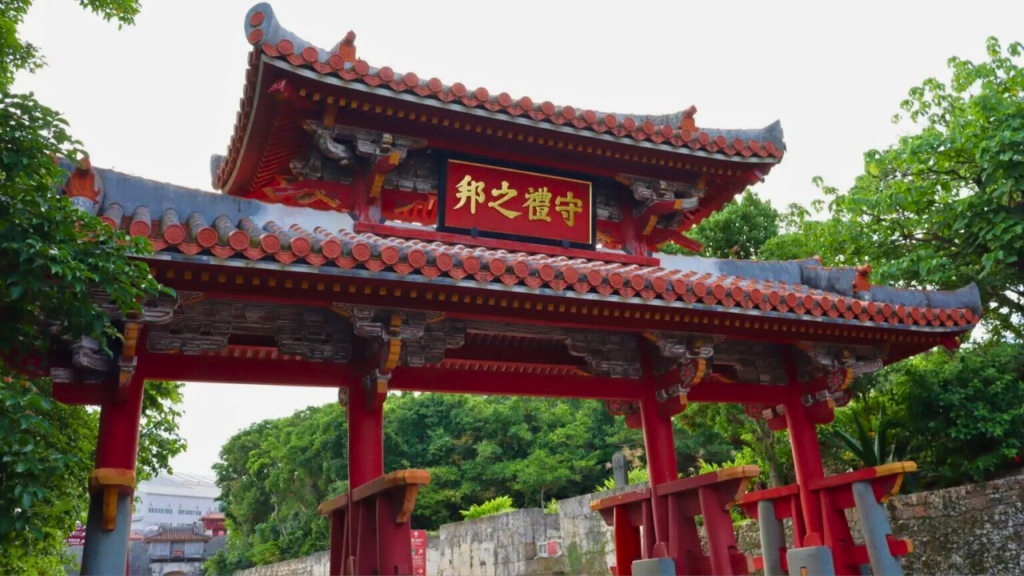
Shureimon Gate stands at the entrance to Shurijo Castle.
The red gate with detailed carvings is one of the most photographed landmarks in Okinawa.
It is also known for appearing on older Japanese 2,000-yen banknotes.
How to Get to Shurijo Castle
By Monorail
Take the Okinawa Urban Monorail (Yui Rail) to Shuri Station.
From the station, walk about 15 minutes to Shurijo Castle Park.
By Bus
Several local buses stop near Shurijo Castle Park.
Bus routes vary depending on your starting location in Naha.
FAQ
A fire in October 2019 destroyed several buildings, including the Main Hall. Reconstruction work continues today.
Yes. Visitors can walk around the castle grounds, see Shureimon Gate and the stone walls, and learn about the restoration.
Current plans aim to complete the restoration of the main buildings in autumn 2026.