


Okinawa cuisine differs from mainland Japanese food. In particular, the dishes reflect local ingredients, pork-based cooking, and regional traditions.
As a result, the flavors, textures, and meal styles often feel distinct from typical Japanese cuisine.
Okinawa Soba
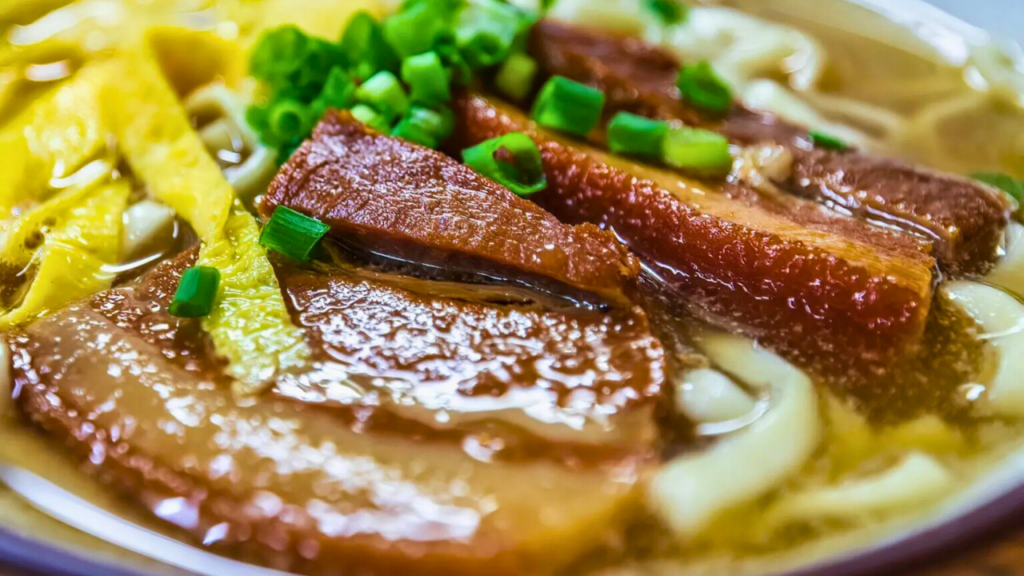
Okinawa soba uses wheat noodles instead of buckwheat.
The broth typically combines pork stock and bonito.
Soft braised pork often appears as a topping.
Goya Champuru
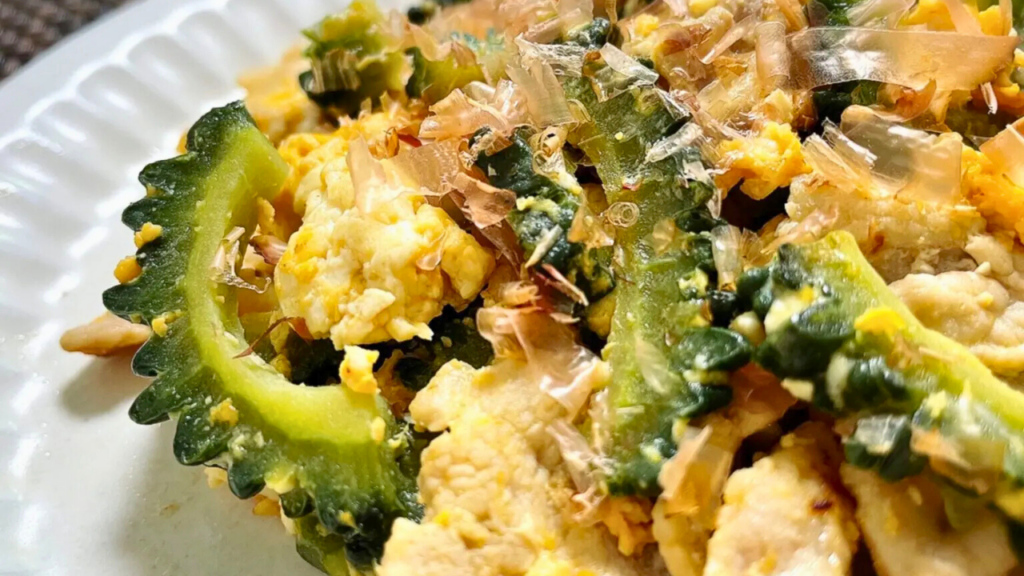
Goya champuru is a stir-fry dish.
It combines bitter melon, tofu, pork, and eggs.
The bitterness defines the flavor profile.
Rafute
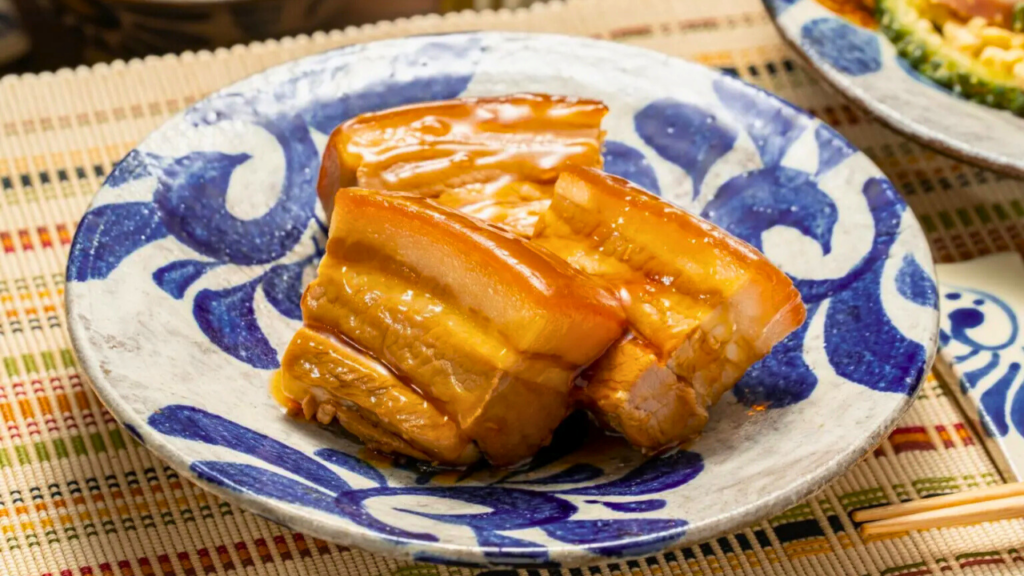
Rafute is slow-braised pork belly.
Cooks simmer the meat in soy sauce and awamori.
The texture becomes soft and rich.
Jushi (Okinawan Mixed Rice)
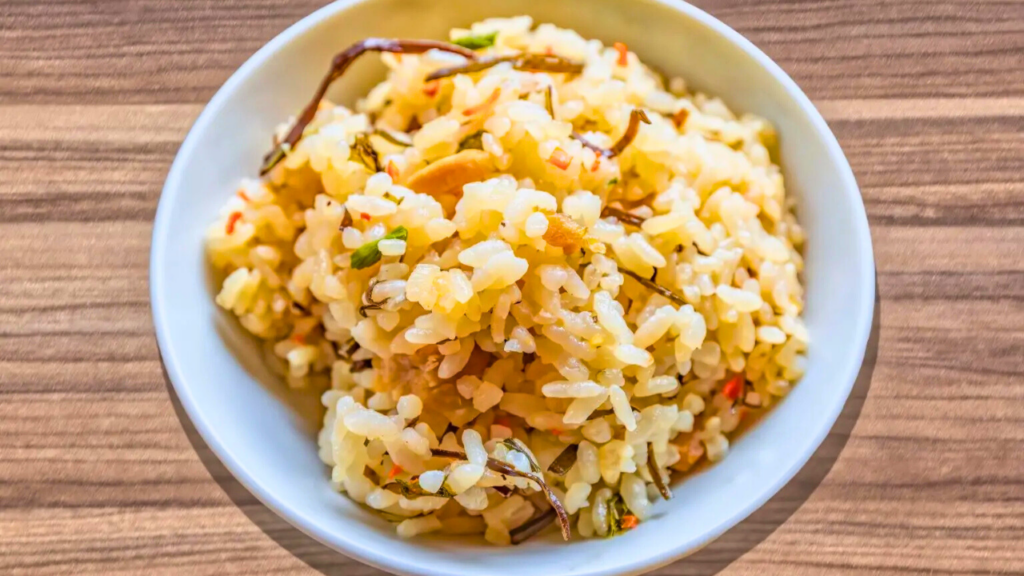
Jushi is seasoned rice.
The dish includes pork, vegetables, and broth.
It commonly appears in home-style meals.
Chinsuko
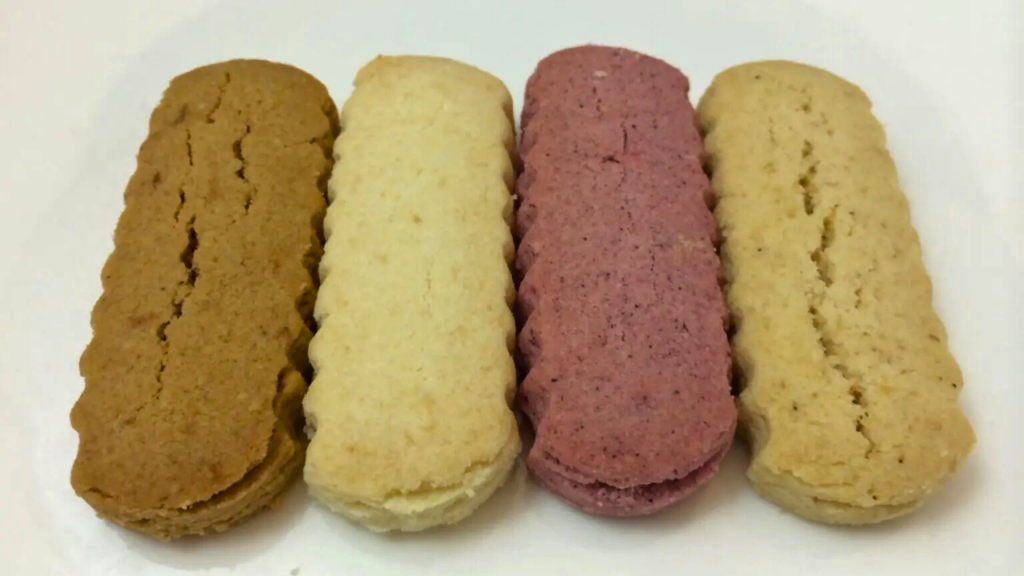
Chinsuko is a traditional cookie.
The texture is dry and crumbly.
The flavor is lightly sweet.
Tebichi (Stewed Pork Trotters)
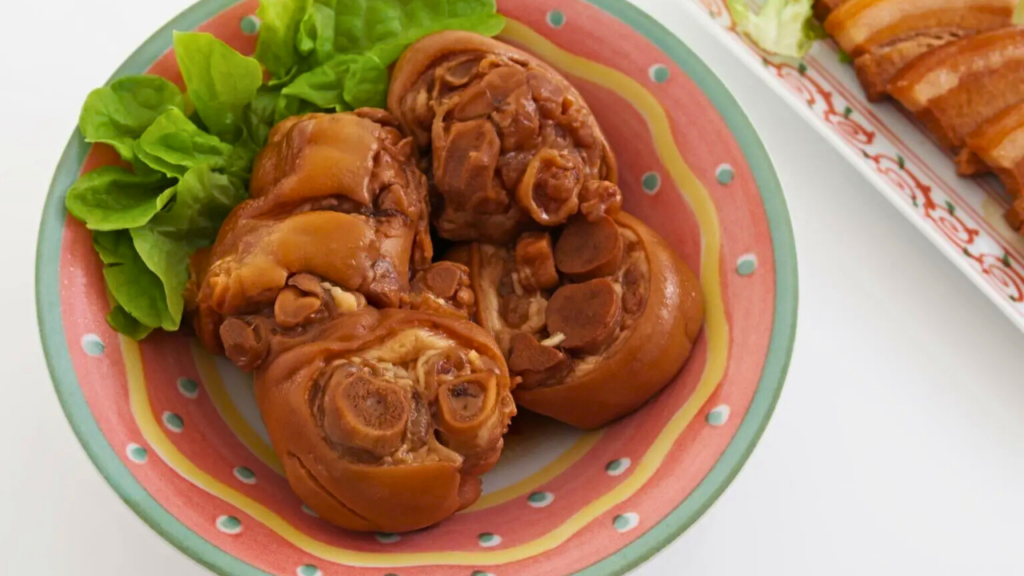
Tebichi is simmered pork trotters.
Slow cooking softens the meat and skin.
The broth carries a strong pork flavor.
Sata Andagi
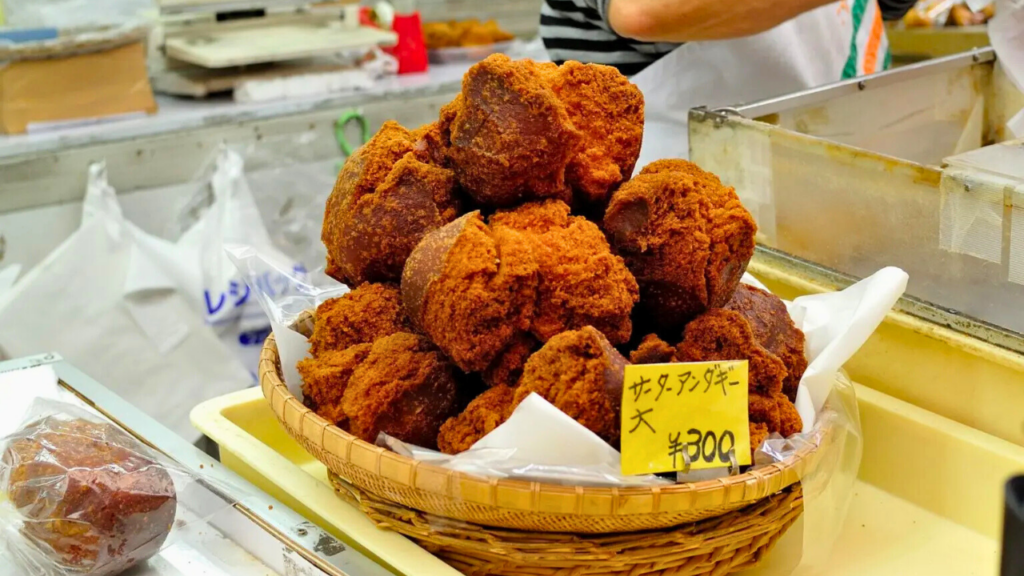
Sata andagi are deep-fried dough balls.
The exterior is firm and crisp.
The inside remains dense and soft.
Beni Imo (Purple Sweet Potato)
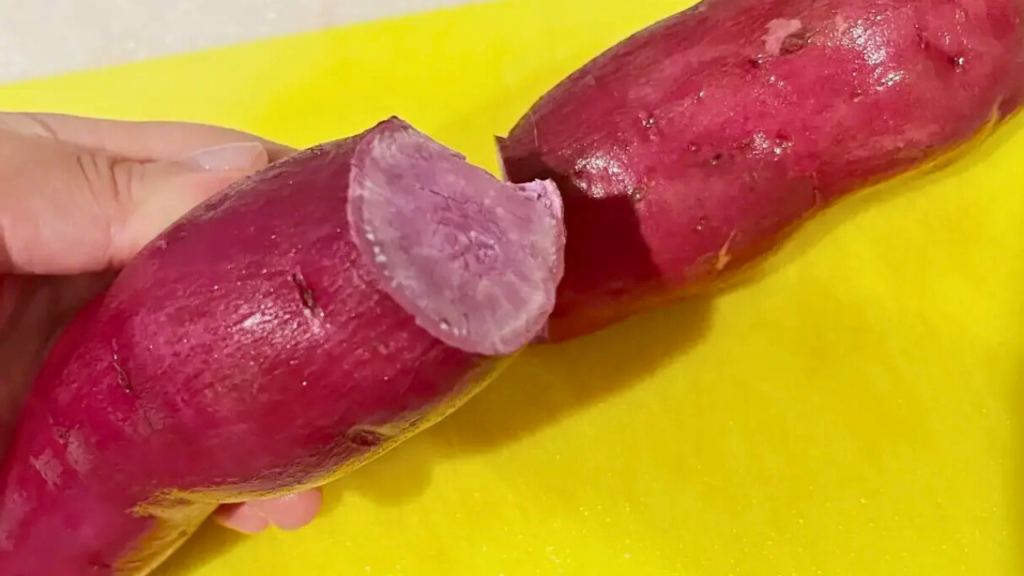
Beni imo appears widely in Okinawan cuisine.
The potato has a smooth texture and mild sweetness.
It frequently appears in desserts.
FAQ
Okinawa soba uses wheat noodles instead of buckwheat.
Additionally, cooks prepare the broth with pork stock.
Goya champuru uses bitter melon as a central ingredient.
As a result, the dish has a sharp, slightly bitter taste.
Many Okinawan dishes use pork for broth and fat.
Therefore, pork strongly influences the overall flavor profile.