
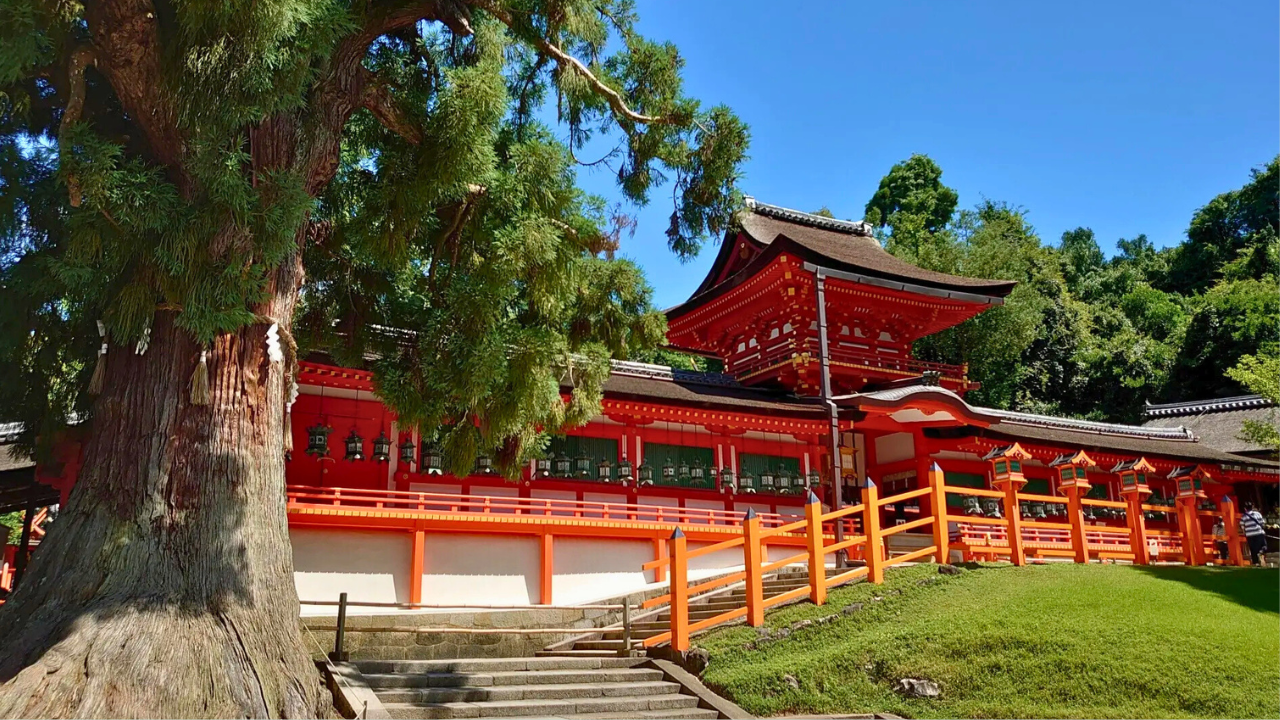
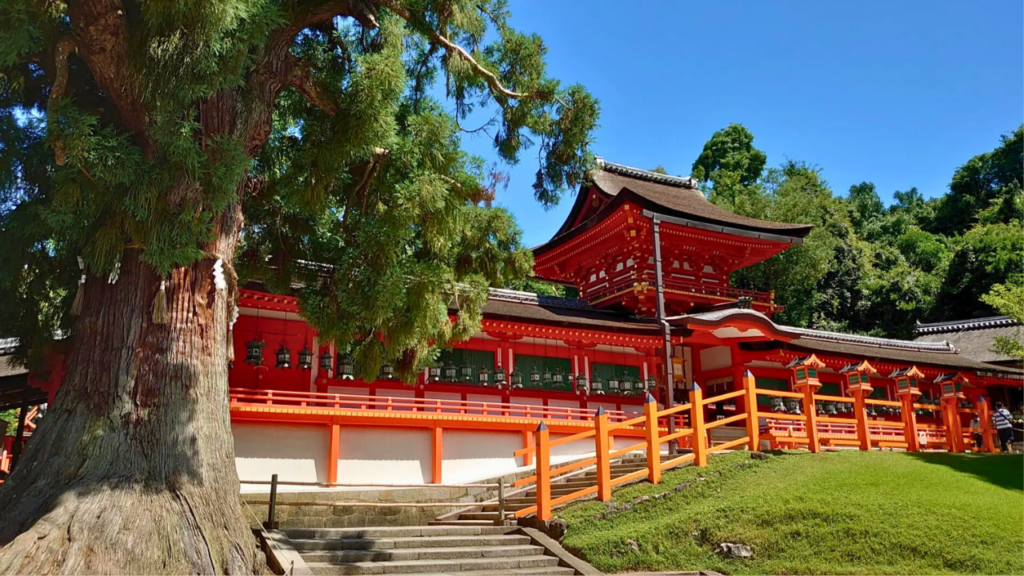
Kasuga Taisha is one of Nara’s most important Shinto shrines.
Founded in 768 by the Fujiwara clan, it has shaped the city’s religious life for over 1,200 years. The shrine stands out for its vermilion buildings and the thousands of lanterns that line its paths.
Main Sanctuary (Honden)
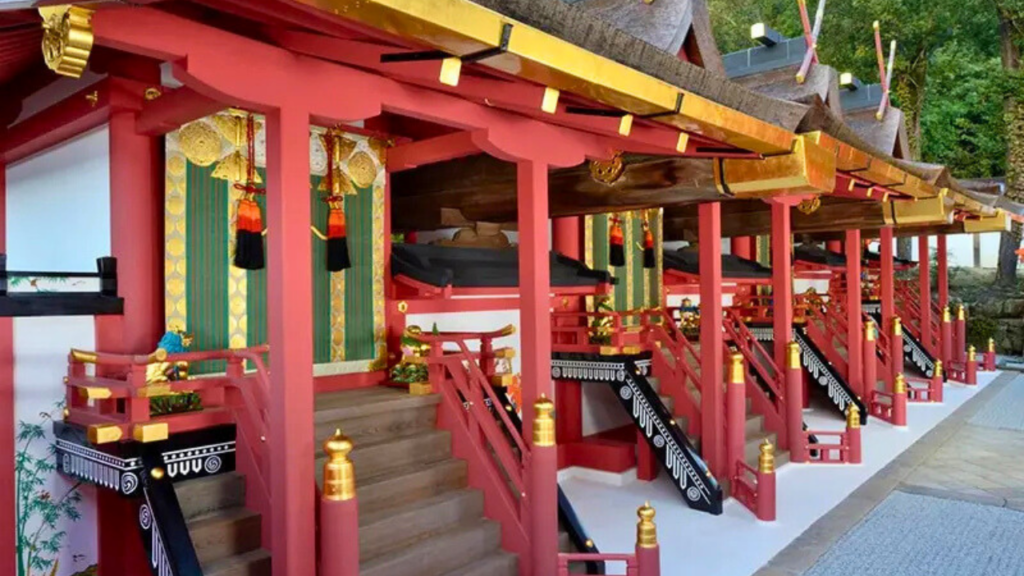
The Honden forms the core of the shrine complex. Its bright red pillars and cypress bark roofs reflect classical Shinto design.
Visitors can walk around the outer grounds freely. Entry to the inner sanctuary requires a small fee.
The Lanterns
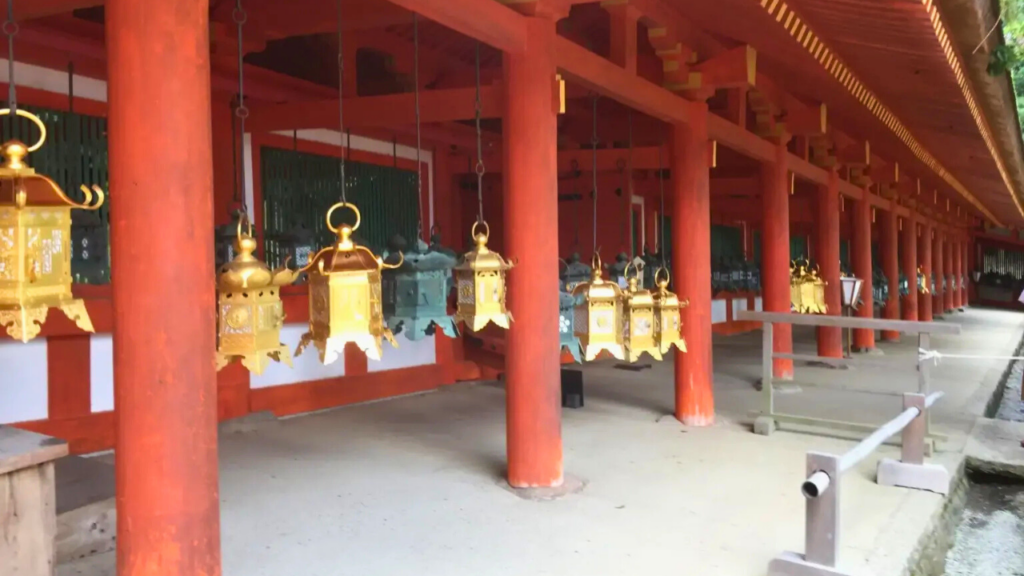
Kasuga Taisha is famous for about 3,000 stone and bronze lanterns donated by worshippers over centuries.
They are lit twice a year—during the Setsubun Mantoro festival in February and the Obon Mantoro in August—when the shrine takes on a quiet, glowing atmosphere.
Manyo Botanical Garden
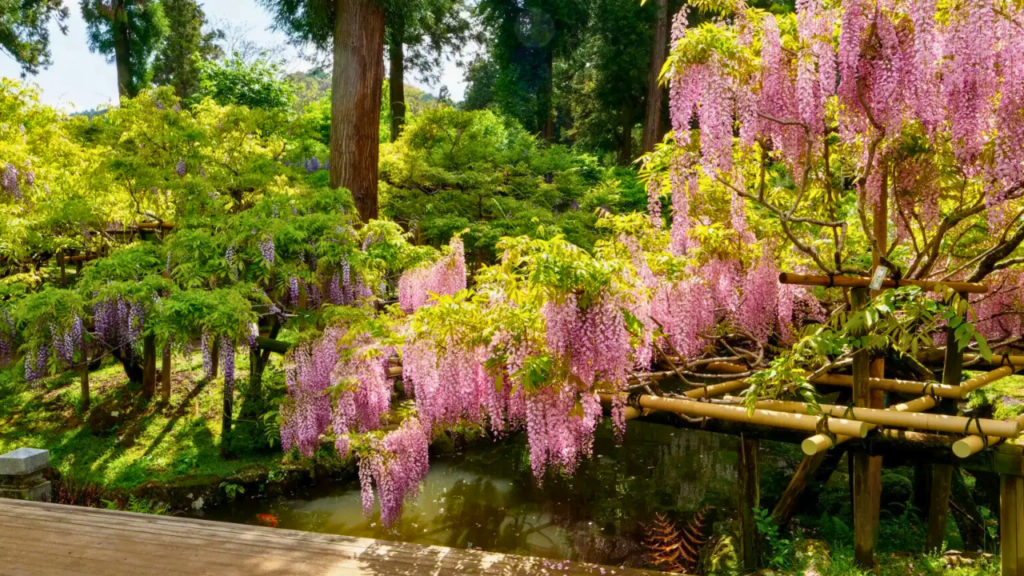
Next to the shrine, the Manyo Botanical Garden displays more than 200 plant species, including wisteria mentioned in the Manyoshu, Japan’s oldest poetry collection.
Late spring, when the wisteria blooms, is the most popular season.
Sacred Forest
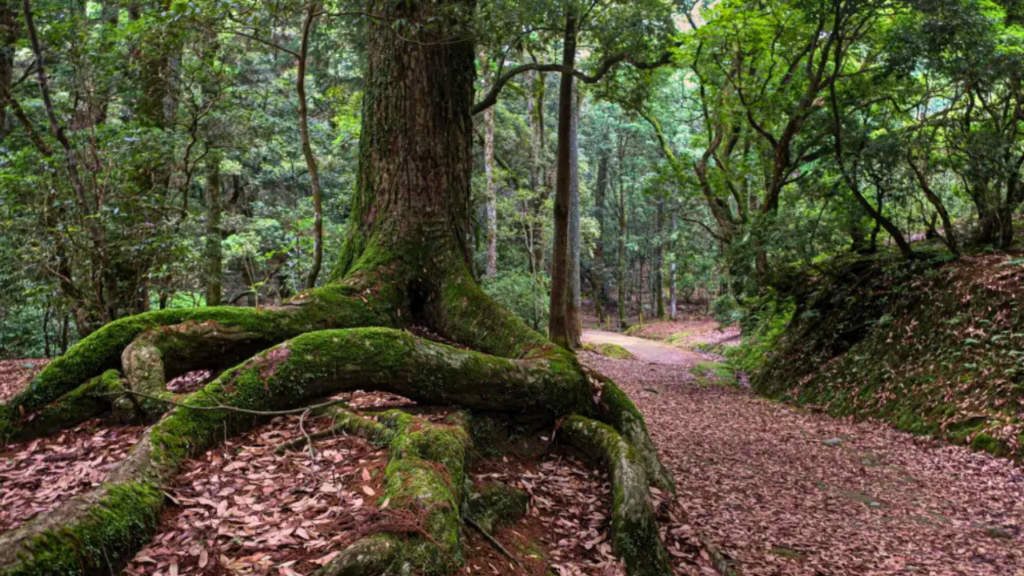
The shrine sits beside the Kasugayama Primeval Forest, protected for over a thousand years.

Walking through this forest adds to the calm setting. Deer, regarded as sacred messengers, move freely through the area and are closely associated with the shrine.

Admission and Hours
- Outer grounds: Free
- Inner sanctuary: 700 yen (4.67 USD)
- Museum and Botanical Garden: 700 yen each (4.67 USD)
Hours:
- March–October: 6:30 AM–5:30 PM
- November–February: 7:00 AM–5:00 PM
Opening times for the museum and garden vary by season.
Access
Kasuga Taisha is located inside Nara Park.
- From Kintetsu Nara Station: About 30 minutes on foot or a short bus ride
- From JR Nara Station: About 45 minutes on foot or bus to Kasuga Taisha Honden
FAQ
Yes. It combines historic architecture, seasonal lantern festivals, and a forest setting unique to Nara.
Allow 1–2 hours to walk the grounds and see the main areas comfortably.